Dongtan acne dermatology clinic: dermatologist-led care for recurrent acne and acne scars
Treatment is led by board-certified dermatologists with university hospital teaching experience, using medical-grade lasers, light therapies, and structured programs rather than one-time facials.
Why choose a dermatology clinic for acne in Dongtan
Acne is more than a cosmetic concern. Inflammatory nodules, cysts, frequent relapses, and scarring risk are signs that the problem involves hormones, oil glands, bacteria, and skin inflammation. These are best managed with medical diagnosis, prescription, and procedures.
At a dedicated acne dermatology clinic in Dongtan, consultations, prescriptions, and procedures are all directed by board-certified dermatologists, not by general beauty staff. This allows your acne to be classified by type and severity, and for treatment to be adjusted over time as your skin changes.
For international patients staying in or near Hwaseong or Dongtan, choosing a clinic that already focuses on acne and scars can save time. You can usually combine medical treatment for active acne with device-based care for redness and scars within the same visit schedule.
Medical team and expertise
One medical director has held leadership roles in dermatology and has extensive experience in acne treatment. This background supports careful, evidence-based diagnosis and long-term acne management planning.
The other medical director has overseas laser training and ongoing academic activity. This background can help when planning laser-based acne scar treatments, fractional resurfacing, and combination procedures.
Location and access in Dongtan
The clinic is located in Dongtan New Town, Hwaseong, Gyeonggi-do, on the 3rd floor of Port Central City along Dongtan-daero Sibeom-gil. This is a commercial building on a main road, convenient for local residents, commuters, and office workers.
For overseas visitors staying in Dongtan or southern Gyeonggi, the area is reachable by bus or taxi from major transport hubs. Being in a mixed-use building means you can usually find cafes and shops nearby to rest between appointments.
Treatment overview: how acne and scars are managed
At this acne dermatology clinic in Dongtan, acne is approached as a medical skin disease. Treatment usually follows a stepwise plan rather than a single session.
Initial diagnosis and planning
During the first visit, the dermatologist will carefully look at your skin in person. They will check what kind of acne you have, how inflamed it is, and how long it has been going on, while also paying attention to your skin type and sensitivity. At the same time, they usually ask what treatments you have already tried, what worked or caused irritation, and what kind of routine you can realistically keep up with. Based on this overall picture, the treatment plan is adjusted so it fits both your skin condition and your daily life.
Evaluate your skin type and sensitivity: oily, combination, dry, or reactive skin, as well as any history of eczema, rosacea, or allergies.
Review your previous treatments: over-the-counter products, antibiotics, isotretinoin, peels, or laser sessions done elsewhere.
Based on this, the doctor can design a structured program that may include medication plus device-based procedures.
Medical acne program
Topical medication: prescription creams or gels to unclog pores, reduce bacteria, and calm inflammation.
Oral medication when needed: antibiotics for short-term flare control, hormonal regulation for suitable patients, or other systemic options depending on your condition and medical history.
In-clinic procedures: gentle extractions, medical peels, and light or laser sessions tailored to your skin sensitivity.
Once the active inflammation is calmer, the focus of treatment naturally shifts. At that stage, many patients start to worry more about enlarged pores, uneven texture, or the marks and scars left behind by acne. Instead of stopping treatment altogether, the dermatologist can gradually move the plan toward pore and scar care, adding suitable procedures step by step while keeping an eye on how your skin is healing.
For patients with enlarged pores, uneven texture, or post-acne scarring, a separate pore and acne scar program can be added once active inflammation is under better control. This may include fractional lasers, radiofrequency, and targeted scar procedures.
Device-based treatments available
One of the main advantages of this acne dermatology clinic in Dongtan is that you can access a range of medical devices in one place and design combination therapy tailored to your acne type and scar pattern.
Photodynamic therapy (PDT)
PDT can be used for inflammatory, resistant acne that does not respond well to basic topical or oral care.
Fractional devices for scars and pores
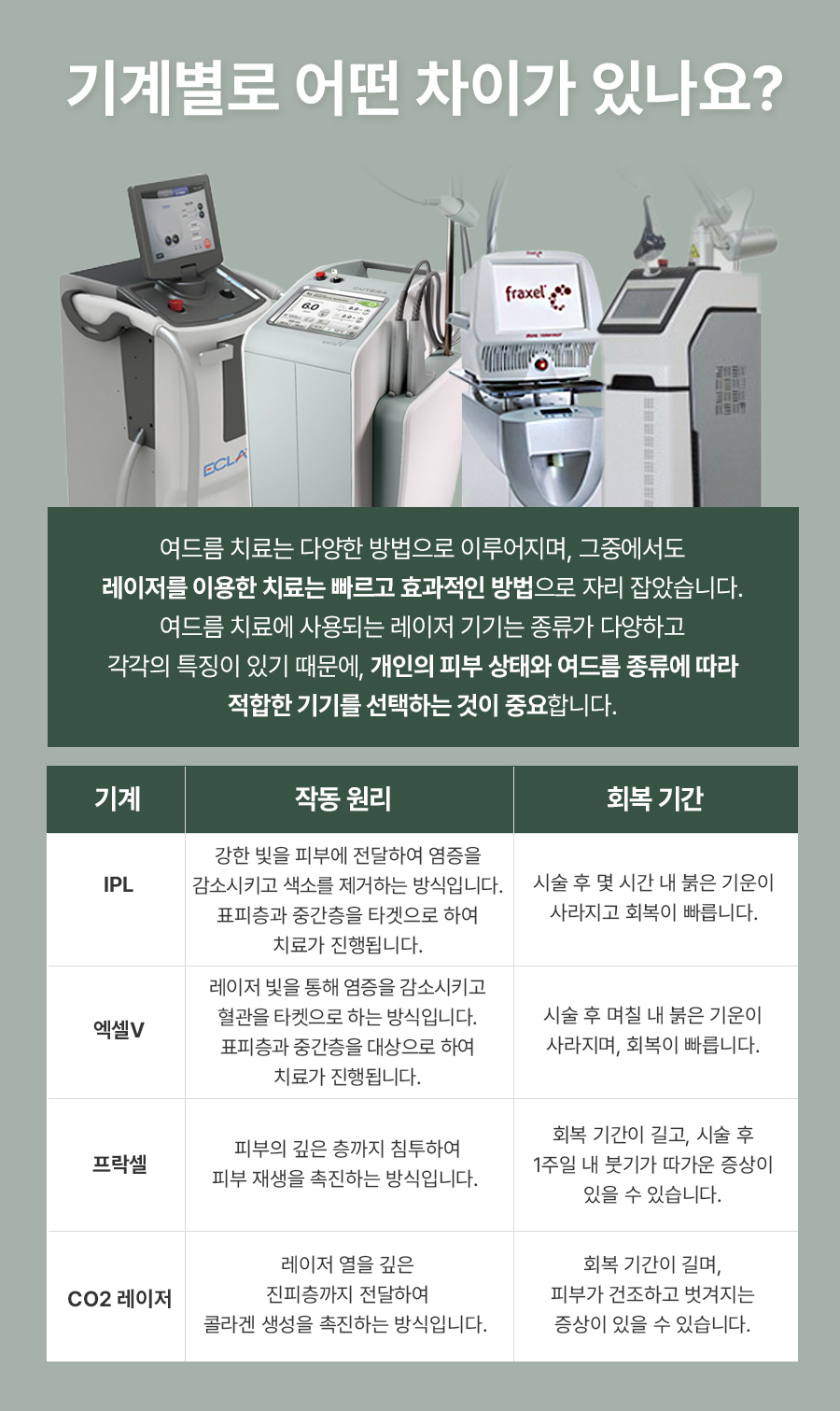
For acne scars and enlarged pores, the clinic uses fractional devices such as Pro Fraxel and Regatto 2.
Fractional treatments can be adjusted in depth and density depending on your scar type, such as boxcar, rolling, or icepick scars. Deeper scars may require multiple sessions with gradual improvement.
Secret RF and gold-based PTT
Secret RF combines microneedling with radiofrequency energy delivered into the deeper dermis. This can help with deeper scars, overall texture, and sebaceous gland targeting.
Gold-based photothermal therapy (PTT) uses gold particles and light energy to focus on oil glands and inflammatory pathways. It may be considered for patients with persistent, oil-driven acne who need more than standard topical or oral treatment.
Scar fillers for depressed scars
For atrophic, depressed scars that do not fully lift with laser or RF alone, scar fillers can be used to raise the base of the scar and improve the surface contour. This is usually done selectively, after careful assessment of scar depth and location.
Redness and vascular treatments
After acne heals, some patients are left with persistent redness, flushing, or red marks. The clinic uses vascular and redness-focused devices, such as vascular laser platforms and ultrasound-based skin management, to address post-acne erythema.
These devices can help reduce visible blood vessels and lingering red patches, which is especially important for patients with fair or sensitive skin.
An acne dermatology clinic in Dongtan with this profile may be suitable if you:
Have persistent or cystic acne that keeps returning despite over-the-counter products.
Notice early scarring, such as pits or depressions, even while acne is still active.
Have tried cosmetic facials or basic spa treatments without meaningful improvement.
Have sensitive, easily irritated skin that reacts badly to harsh peels or random products.
Want to combine medical treatment for active acne with scar and redness care in one place.
Are staying in or visiting Dongtan, Hwaseong, or southern Gyeonggi and need convenient access with evening or Saturday hours.
After you return home, you can also ask about remote follow-up to monitor your progress.
General skin care shops or beauty salons usually focus on temporary soothing, basic cleansing, and cosmetic care, whereas a specialist acne dermatology clinic in Dongtan approaches acne as a medical condition. Here, a dermatologist diagnoses the type and severity of acne, prescribes medical treatments when needed, and combines them with procedures that match your skin’s condition rather than offering a fixed, one‑size‑fits‑all package.
There are several important differences between a specialist acne dermatology clinic in Dongtan and general skin care shops or beauty salons.
Medical supervision
All acne and scar treatments are planned and performed under board-certified dermatologists. This contrasts with non-medical staff performing peels or extractions without full assessment of your medical history, medications, or scarring risk.
Academic and hospital background
The doctors have university hospital teaching roles and are members of national and international dermatology and laser societies. This supports the use of up-to-date protocols and safer combination therapies.
Range of devices in one place
Because the clinic has multiple devices, treatment can be customized for different acne and scar types. For example, inflammatory nodules may be treated with PDT and medication, while rolling scars and enlarged pores may receive fractional laser or Secret RF.
Transparent pricing
Non-insured price information is officially posted, which can help you understand approximate costs before agreeing to procedures.
Patient experience, hours, and systems
Clinic hours
The clinic offers weekday evening hours and Saturday morning or early afternoon sessions, which is useful if you are working or studying during the day. There is no treatment on Sundays and public holidays, and a lunch break is observed.
Because hours can change, especially around holidays, it is important to check the exact schedule on the clinic’s official site or by phone before visiting.
Online reservation
Online reservation is available on specific weekdays through a major local portal reservation system. For international patients, this can reduce waiting time and help you coordinate with your travel schedule.
Before-and-after case boards
Registered members can access before-and-after photo boards for acne, redness, pigmentation, and scars. While results vary by individual, these boards indicate that the clinic has experience with a variety of cases.
Online consultation and pre-visit preparation
If you are planning to visit Korea for acne treatment, an online consultation before your trip is highly recommended. This allows the dermatologist to estimate how many sessions you might need and whether your goals are realistic within your stay.
Information to prepare for online consultation
Current photos: clear, well-lit photos of your face from the front and both sides, plus close-ups of areas with active acne or scars.
Treatment history: list of previous medications (topical and oral), procedures (lasers, peels, microneedling, PDT), and approximate dates.
Medical history: any chronic illnesses, allergies, pregnancy or breastfeeding status, and current medications or supplements.
Goals and priorities: whether your main focus is stopping new acne, improving scars, reducing redness, or all of the above.
Questions to ask before booking
How many sessions are typically recommended for your level of acne or scarring during a 2 to 4 week stay.
Which devices are likely to be used in your case, and what the expected downtime is.
Whether certain medications (for example, isotretinoin or blood thinners) need to be stopped before procedures.
How follow-up can be managed once you return to your home country.
This way, you can return home with a plan you can continue.
For visitors who can stay a bit longer, for example around three to four weeks, there is room to adjust the treatment after seeing how your skin responds. In this case, the dermatologist may space out several sessions, combine acne control with the first steps of scar or pore care, and fine‑tune your home care routine before you leave Korea.
Your actual plan will depend on your skin condition and length of stay, but the following is a common structure for overseas patients.
Short stay: about 1 week
Suitable if your main goal is medical assessment, optimization of topical and oral treatment, and possibly one or two light procedures with minimal downtime.
Day 1: in-depth consultation, skin assessment, prescription of medication, and possibly a gentle in-clinic treatment.
Day 3 to 5: one session of PDT or a mild fractional or RF procedure if appropriate.
Medium stay: about 2 to 3 weeks
This is often ideal for combining acne control with the start of scar care.
Week 1: consultation, start of medication, first device session (PDT or fractional, depending on your condition).
Week 2: follow-up visit, adjustment of medications, second device session targeting either active acne or early scars.
Week 3: additional session for texture or redness, plus planning of long-term home care and follow-up.
Longer stay: 4 to 6 weeks or more
Allows for a more intensive program with several device sessions spaced safely apart.
Week 1 to 2: stabilize active acne and inflammation.
Week 3 to 6: focus more on scars, pores, and redness with fractional lasers, Secret RF, or vascular devices, while continuing acne control.
Pain, downtime, and daily life
Mild redness and swelling can occur after treatments like Pro Fraxel, Regatto 2, or Secret RF. This often settles within a few days, but deeper sessions may require you to plan for a short period of visible redness or flaking. The clinic can adjust energy levels and intervals to fit your schedule.
For patients who cannot afford much downtime, the dermatologist can prioritize lower-downtime options, such as gentler fractional settings, ultrasound-based management, or staged treatment focusing first on inflammation.
Aftercare and long-term management
Post-procedure care
After laser, RF, or PDT sessions, you will receive instructions on:
Cleansing: using mild, non-irritating cleansers and avoiding scrubs.
Moisturizing: supporting the skin barrier with simple, fragrance-free products.
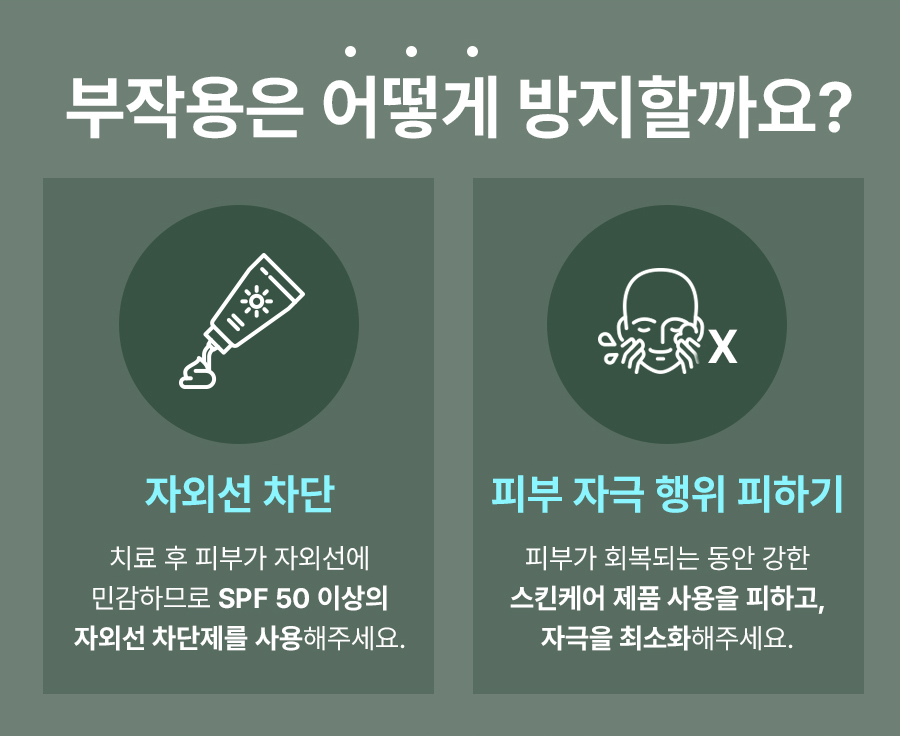
Sun protection: using broad-spectrum sunscreen and avoiding direct sun exposure, especially during the healing phase.
What to avoid: harsh exfoliants, unapproved peels, and new cosmetic products that could irritate treated skin.
Preventing new scars
One of the main goals of specialist-led acne treatment is to prevent new scars from forming. This requires consistent follow-up, even after your skin improves.
Your dermatologist may:
Adjust medication doses over time rather than stopping abruptly.
Recommend maintenance treatments at longer intervals.
Suggest a simple, sustainable home care routine to avoid rebound breakouts.
Remote follow-up after you return home
If you are an overseas patient, ask during your visit how remote follow-up can be arranged. In many cases, you can send updated photos and symptom descriptions to adjust topical or oral prescriptions and decide whether additional procedures are needed on a future trip.
Scar‑focused laser or procedure plans can often be adjusted for sensitive skin by lowering intensity, increasing intervals, and combining them with calming care, but this is always decided after the dermatologist examines your skin directly.
If you are visiting from abroad, it is usually possible to begin treatment soon after you arrive, as long as you share your schedule in advance and bring information about any medications or procedures you have had recently. When choosing a clinic for acne or acne scar care in Dongtan, it helps to look at whether a dermatologist is directly involved in the treatment plan, whether they explain the expected number of sessions and downtime clearly, and whether the proposed plan matches your available time in Korea and your daily routine.
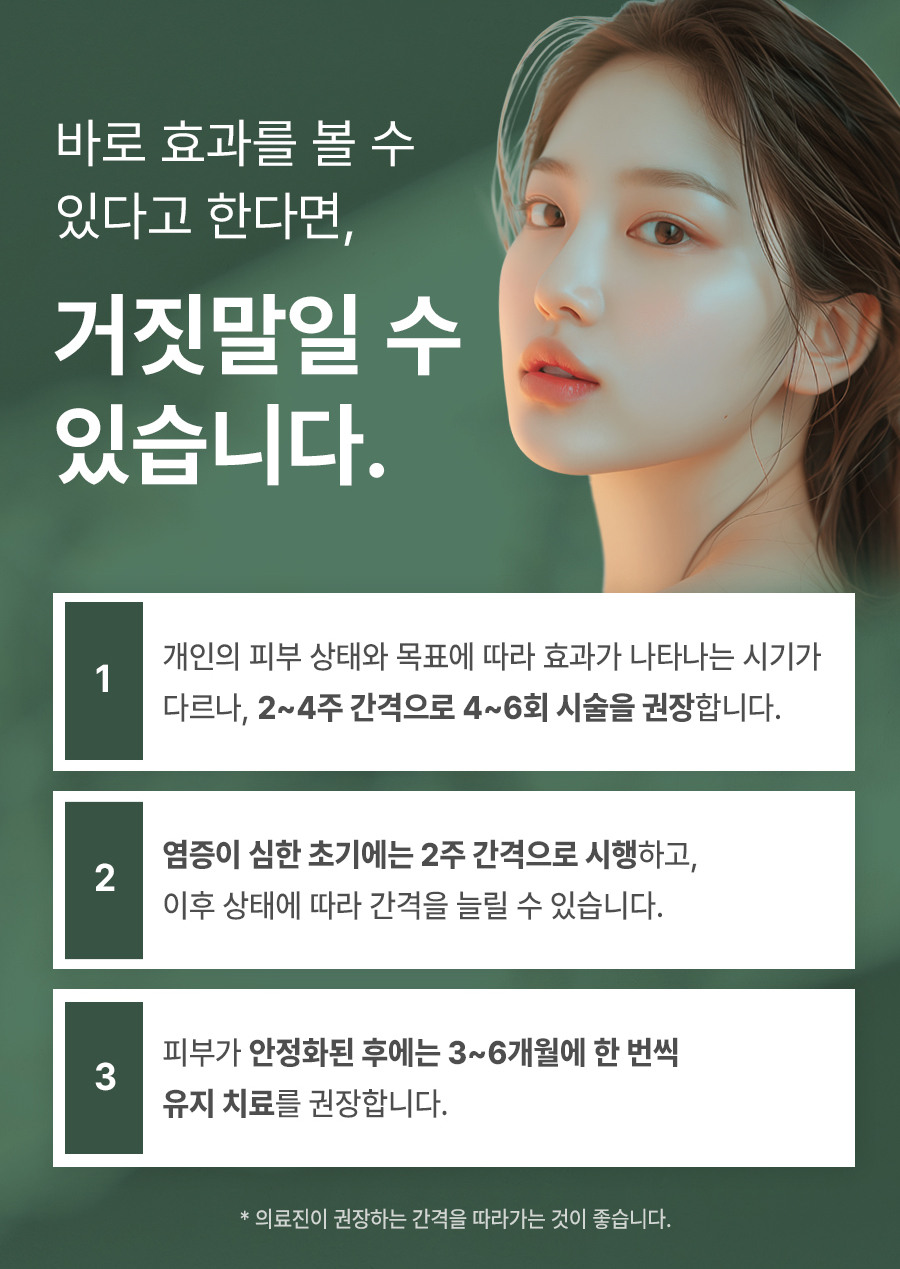
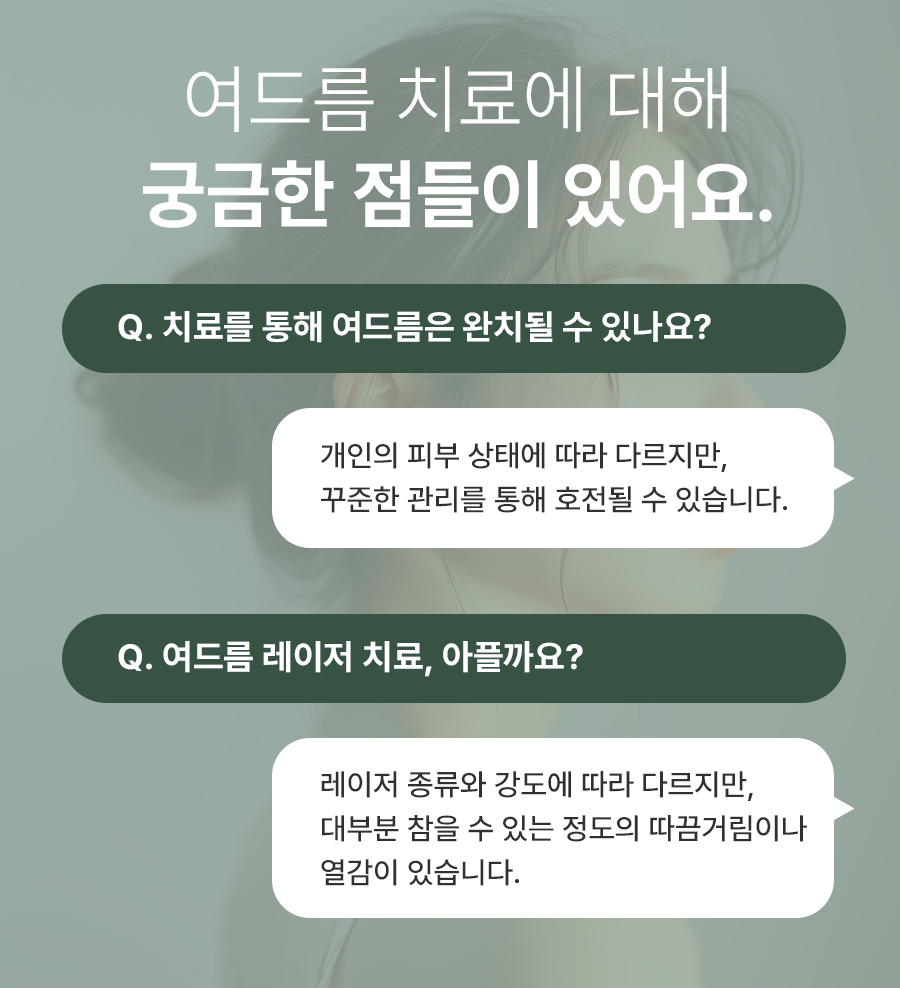
The number of sessions depends on your acne severity, scar depth, and how long you will stay in Korea. For active acne, some patients notice improvement after a few weeks of medication and one or two procedures, but stable control usually takes several months. For scars, meaningful improvement often requires multiple fractional or RF sessions spaced several weeks apart. During your first consultation, the dermatologist can outline a realistic plan based on your schedule.

Is acne scar laser treatment in Dongtan suitable for sensitive skin?
Many fractional and RF devices can be adjusted for sensitive or reactive skin by lowering energy, changing density, or increasing intervals between sessions. The key is a careful assessment of your skin type and history of irritation. If you have conditions like rosacea or eczema, inform the doctor in advance so the program can be modified. A test area or gradual approach is often used to reduce the risk of flare-ups.
Can I start treatment as soon as I arrive in Korea?
In many cases, yes. After your initial consultation, you may be able to begin topical or oral medication and receive a gentle in-clinic procedure on the same day, as long as there are no medical contraindications. For more intensive treatments like deeper fractional laser or combined procedures, the clinic may schedule you on another day to allow time for preparation and numbing. It is helpful to share your travel dates in advance during online consultation.
What should I check before choosing an acne scar laser clinic in Dongtan?
Before you decide, check whether dermatologists are board-certified, what kind of devices are available, and how often they treat acne and scars specifically. Ask which device combinations are commonly used for your scar type, what the expected downtime is, and how aftercare is handled. It is also wise to confirm that non-insured price information is clearly provided and that there is a system for follow-up, especially if you are an overseas patient who will return home after treatment.
Soft call to action
If you are considering Dongtan acne treatment by dermatologists and want to understand what is realistic for your skin and travel schedule, an online consultation is a good first step. Prepare clear photos, your treatment history, and your main concerns, then contact the clinic in Dongtan New Town to discuss options.
If you are considering treatment during a short stay in Korea, start by using online consultation to coordinate your schedule and treatment goals so you can set a realistic plan for what is possible within your visit.


댓글
댓글 쓰기