Dongtan 2 dermatology clinic for medical skin and laser care
- 공유 링크 만들기
- X
- 이메일
- 기타 앱
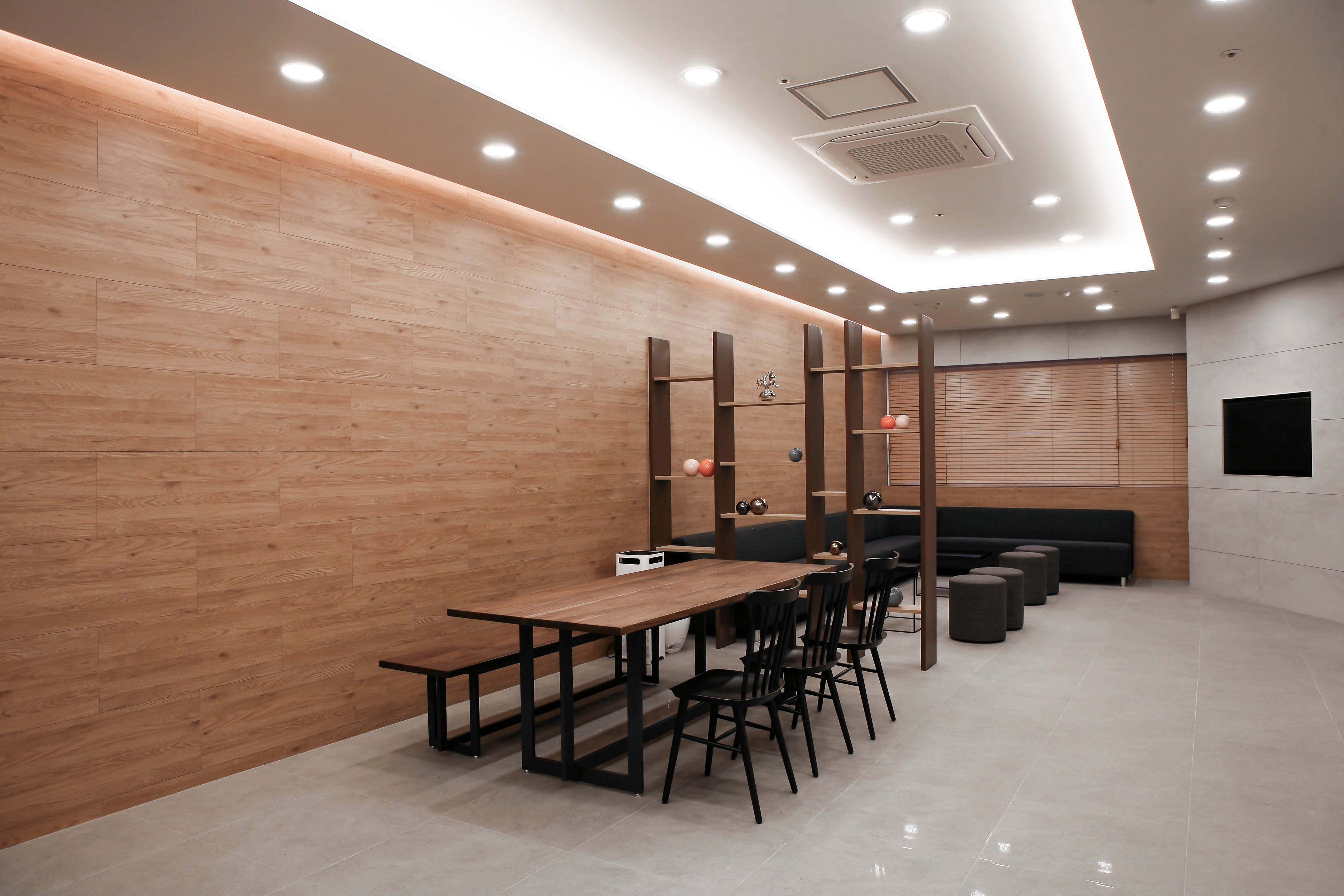
Dongtan 2 dermatology clinic overview
This clinic is located in the Port Central City building in Dongtan 2 New Town, Hwaseong, Gyeonggi-do. The clinic states it is staffed by two dermatologists with university medical training and hospital affiliations. According to the clinic, one medical director has previous leadership experience in a government medical office and strong board exam performance, while the other reports having undertaken laser training abroad and being active in professional groups related to psoriasis and vitiligo.
Direct answer summary for overseas patients
For international patients, this Dongtan 2 clinic says it offers university-hospital–level dermatology with a focus on lasers, acne and scars, redness, psoriasis and vitiligo, lifting, and anti-aging. The clinic indicates that dermatologists plan and perform major laser and injectable procedures and that it uses a range of branded laser and energy devices.

Most overseas visitors can complete consultation and first treatments within a few days, with follow-up supported by online consultation. This suits patients who want both medical skin care and aesthetic improvement in one place, under specialist supervision.
Treatment areas and main programs
This clinic positions itself as a dedicated dermatology center rather than a general aesthetic shop. The range of services covers medical skin disease, acne and scars, pigmentation, lifting and anti-aging, scalp and hair loss, nail fungus, and body contouring.
Medical dermatology and chronic skin disease
Psoriasis and vitiligo care
Psoriasis and vitiligo are highlighted as core areas. Care is provided directly by a dermatologist who is a member of national psoriasis and vitiligo societies. This background supports a more structured approach to chronic inflammatory and pigmentary skin diseases.
Because psoriasis and vitiligo often require long-term management rather than one-time procedures, the clinic focuses on realistic goal setting, monitoring, and gradual improvement.

Eczema, atopic dermatitis, and dermatitis
The clinic also manages common but often frustrating conditions such as eczema, atopic dermatitis, and various forms of dermatitis. Diagnosis is based on clinical examination and, when needed, patch testing or other investigations.
Plans may include prescription creams, oral medications, moisturization strategies, and lifestyle guidance to reduce flare triggers. For international patients, the dermatologists can help design a regimen that is practical to continue at home, using products and medications that are reasonably accessible in your country when possible.
Scalp and hair loss programs
Scalp conditions and hair loss are another focus. The clinic evaluates pattern hair loss, diffuse thinning, and inflammatory scalp disorders. Management can include topical and oral medications, scalp injections, and device-based treatments.
Because hair loss is slow to change, overseas patients are usually advised to start with a detailed evaluation and treatment plan in Korea, then continue follow-up online with periodic in-person visits if they return.
Nail fungus pinpoint care
For hand and foot onychomycosis (nail fungus), the clinic offers a dedicated pinpoint program. This can combine oral or topical antifungal medication with targeted laser or light-based treatment aimed at the nail plate and nail bed.
The goal is to improve clearance rates while monitoring liver function and other safety aspects when systemic medication is used. Nail fungus treatment typically requires months, so the team can guide you on how to continue care after you go back home.
Acne, redness, and scar management
Integrated acne program combining medical therapy and device-based treatments aimed at reducing active lesions and scarring over time.
Acne is one of the most requested services from both local and overseas patients. The clinic runs dedicated acne programs based on an "acne all-kill" concept, combining medical treatment with light and laser therapies and tailored skincare.
Depending on severity, plans may include:
- Topical and oral medications
- PDT (photodynamic therapy) to target oil glands and bacteria
- Gentle cleansing, extraction when appropriate, and soothing care
- Education on skincare routines that are realistic to maintain at home
This integrated approach aims to control active breakouts, reduce inflammation, and minimize the risk of scarring.
Redness and vascular problems
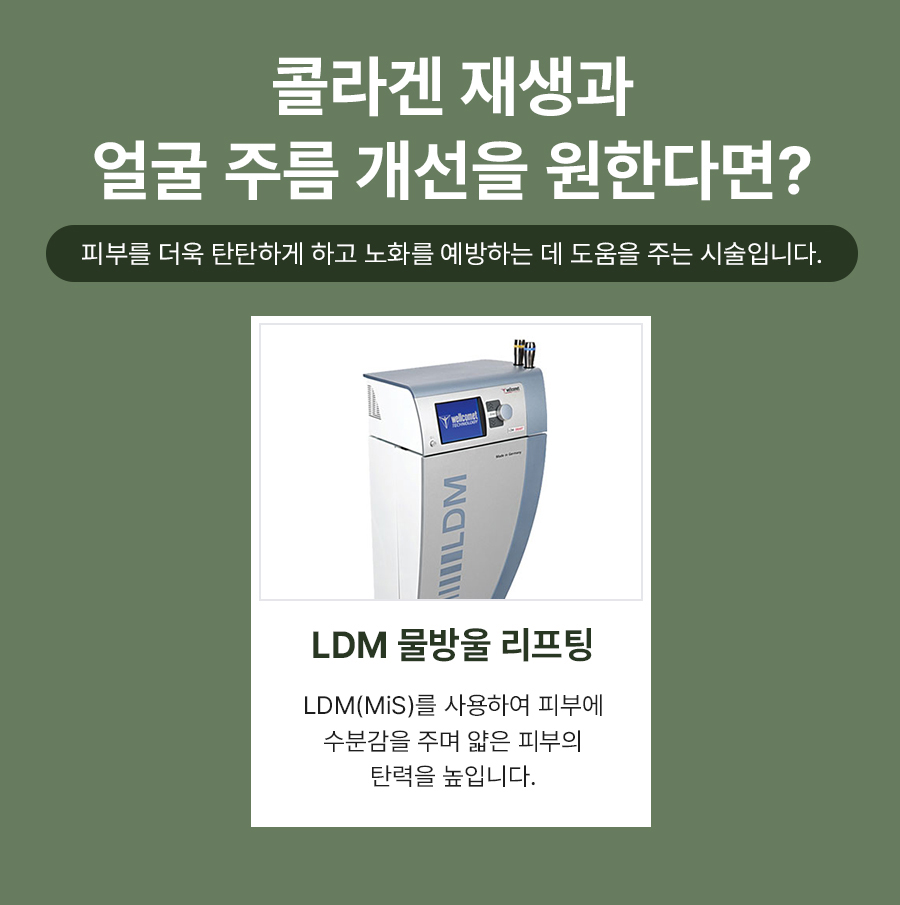
For facial flushing, broken capillaries, and sensitive redness-prone skin, the clinic uses a structured redness program. Key devices include Vbeam Perfecta, a well-known pulsed dye laser for vascular lesions, and genuine LDM ultrasound management for barrier support and calming.
Treatment plans are adjusted for conditions such as rosacea, post-acne redness, and general sensitivity. Parameters are carefully set to reduce the risk of post-treatment hyperpigmentation, particularly in Asian and darker skin types.
Acne scars and enlarged pores
For acne scars and enlarged pores, the clinic combines several devices and techniques:
- Legato 2 for fractional resurfacing with acoustic and laser energy
- ProFractional-type fractional lasers (Pro Fraxel concept) for controlled ablation and collagen remodeling
- Secret RF for microneedle radiofrequency to improve texture and scars
- Scar fillers when volume replacement is needed for deeper atrophic scars
The dermatologists usually design staged plans, spacing sessions to allow recovery and collagen remodeling. Overseas patients can often complete one or two sessions during a short stay, then continue with topical care and remote follow-up.
Pigmentation, melasma, and skin tone-up
Melasma and dark spot management
Pigmentation and melasma require careful handling to avoid rebound or worsening. The clinic uses a combination of whitening and toning programs, including Fotona laser toning, GentleMax Pro, BBL, and iontophoresis-based treatments such as Ionzyme DF.
Rather than aggressive, high-energy single sessions, the dermatologists emphasize controlled parameters and gradual improvement, particularly for melasma. Treatment often combines:

- Low-fluence laser toning
- Topical brightening agents
- Sun protection strategies
- Maintenance treatments spaced over time
This is especially important for international patients who may have limited time in Korea. The team can help prioritize what is realistic within your visit window and what should be continued at home.
Overall tone-up and texture
For patients who mainly want brighter, more even skin with fewer fine lines, the clinic can combine light-based devices (BBL, Fotona toning), GentleMax Pro for pigment and hair, and Ionzyme DF to enhance penetration of active ingredients.
These programs are often suitable for visitors with only a few days in Korea, as downtime is usually minimal and improvements can be seen progressively.

Lifting, elasticity, and anti-aging
Non-surgical lifting devices
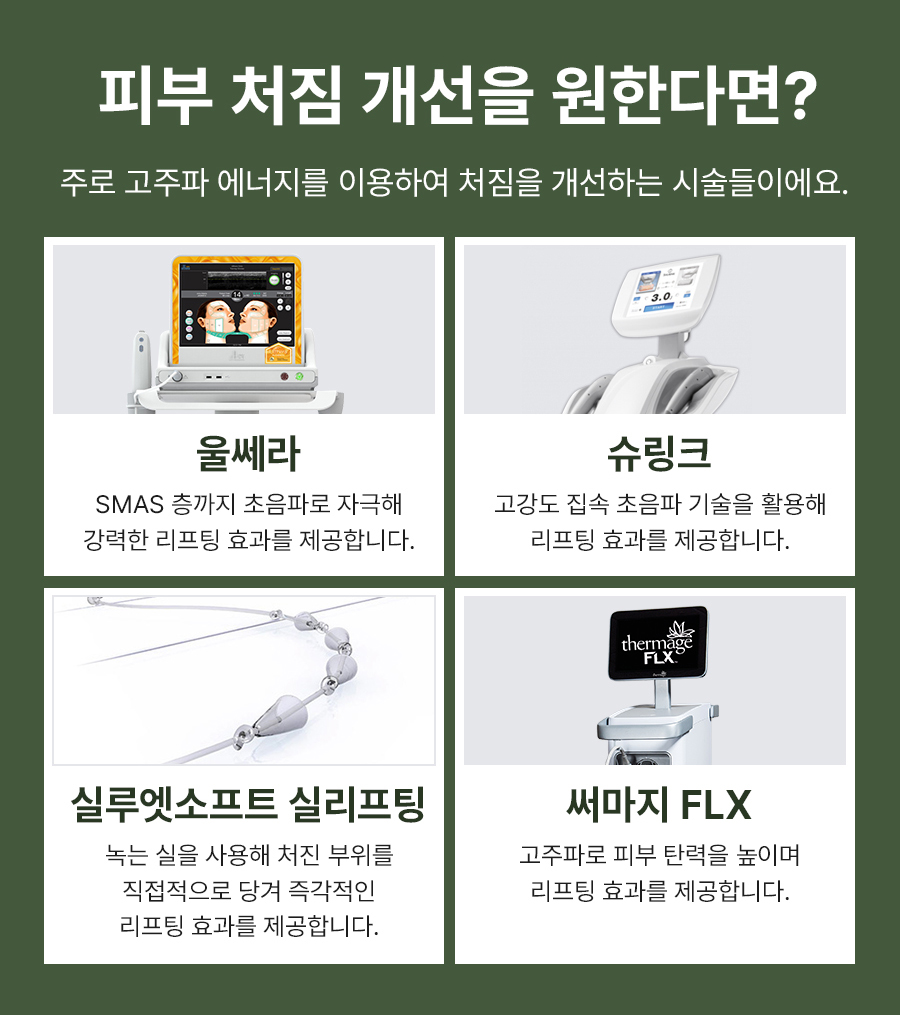
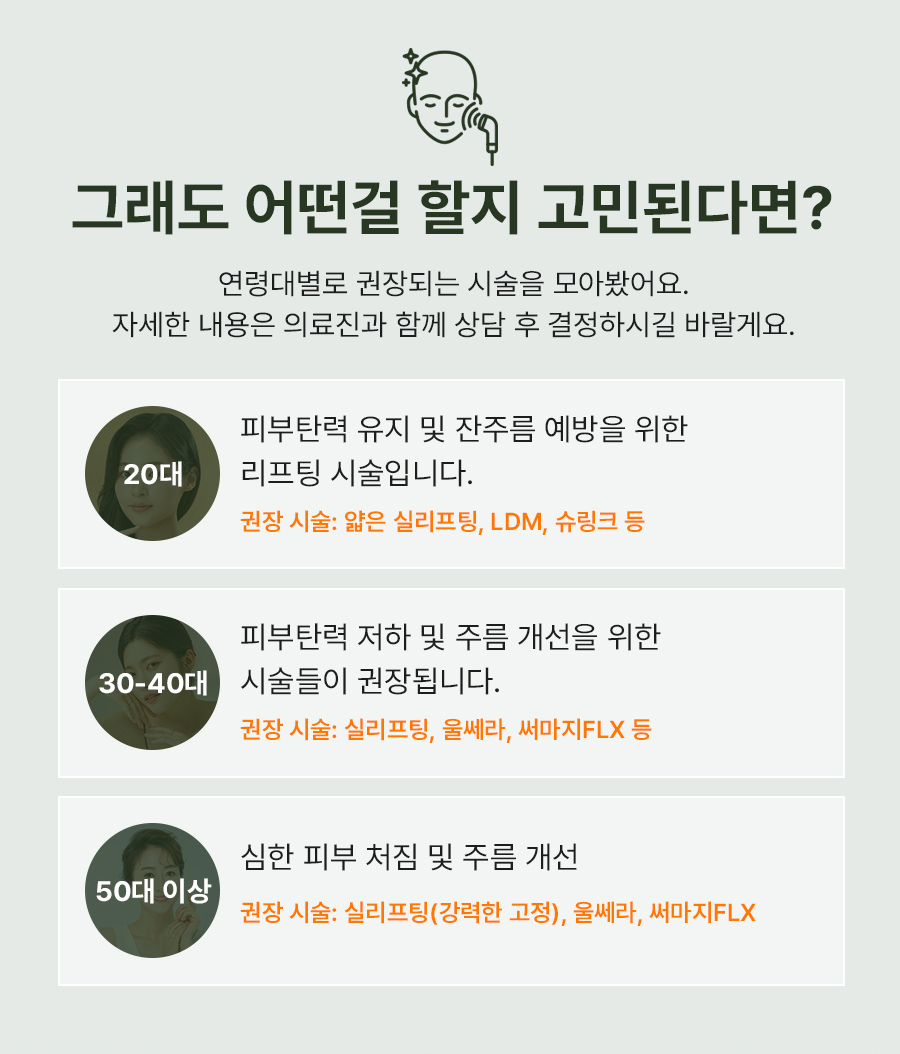
The clinic offers a full suite of lifting and tightening devices, including 3D Ulthera, Thermage FLX, SkinTyte, Shurink, and Onda lifting. These are used to address skin laxity, jawline definition, and overall facial firmness.
Ulthera and Shurink use focused ultrasound to target deeper layers for lifting. Thermage FLX and SkinTyte use radiofrequency or light-based energy for tightening. Onda lifting, a newer introduction, uses specialized microwave technology for contouring and tightening, and is currently promoted as a new event at the clinic.
Minimally invasive lifting and injectables
For patients needing more definition or targeted lifting, minimally invasive options are available, such as Mint lifting threads and Silhouette Soft. These can be combined with injectables like Rejuran, hyaluronic acid fillers, and anti-aging injections.
Submental fat and contouring can be treated with Belkyra injections under the chin, along with botulinum toxin for facial slimming or body areas such as the calves or shoulders, depending on individual anatomy and goals.

Because these procedures require precise assessment of facial structure and tissue quality, the dermatologists personally perform consultation and treatment planning.
Injectables, skin boosters, and body clinic
Volume restoration and collagen stimulation
The clinic provides botulinum toxin and hyaluronic acid fillers for dynamic wrinkles and volume loss. In addition, specialized fillers and biostimulators such as Juvelook and Ellanse-type products are used to stimulate collagen and improve skin quality over time.
These are often combined with laser or energy-based treatments for a more comprehensive anti-aging plan.
Skin boosters and hydro lifting
Hydro lifting or water glow injections are used to improve hydration and fine lines. Other skin boosters can target elasticity, pores, and overall radiance.

These treatments can be scheduled with minimal downtime, which is convenient for overseas visitors who have tight travel plans.
Body clinic services
The body clinic includes stretch mark care, hair removal, hyperhidrosis treatment, and body botox. For hair removal, devices like GentleMax Pro can be used on various body areas.
Stretch marks may be addressed with fractional lasers and RF microneedling. Hyperhidrosis (excessive sweating) can be treated with botulinum toxin injections in the underarms, palms, or other areas after consultation.
Technology, safety, and dermatologist-led care
Advanced devices and laser expertise
A key differentiation point is the

The clinic notes that one medical director trained at the UCI Beckman Laser Institute and says this experience informs device selection and parameter-setting, with the goal of matching device, wavelength, and energy to each patient's skin type and concern.
Dermatologist-performed procedures
This is particularly important for complex conditions such as melasma, rosacea, psoriasis, and vitiligo, and for combination treatments.
The clinic also maintains before-and-after photo archives for acne, redness, pigmentation, and scars. These are available to logged-in members on their system and are used as internal references to explain realistic outcomes and timelines.
Transparent pricing and realistic expectations
The clinic states that it discloses non-insured price information and aims to provide clear estimates and discuss possible additional costs before treatment, while noting that exact prices can change over time.

The dermatologists emphasize individualized diagnosis, realistic expectations, and follow-up care. They avoid promising a cure or perfect results, especially for chronic or recurrent conditions, and instead focus on measurable improvement and maintenance.
Who may consider this Dongtan 2 dermatology clinic
This clinic may be a good fit if you are:
An international resident in Korea or a medical tourist planning to visit the Seoul–Gyeonggi area
Looking for specialist-led care for acne, redness, pigmentation, scars, or chronic skin diseases
Interested in non-surgical lifting and anti-aging using devices like Ulthera, Thermage FLX, and Onda
Dealing with psoriasis, vitiligo, or long-standing dermatitis and want a dermatologist familiar with these conditions
Seeking combined care for hair loss, nail fungus, and skin concerns in one place
It may be less suitable if you are only interested in simple spa-type facials without medical evaluation, or if you expect one-time procedures to permanently solve chronic conditions.
Clinic hours and visit planning
Clinic hours are generally:
- Monday to Thursday: 10:00 to 19:00
- Friday: 10:00 to 20:00
- Saturday: 09:00 to 14:00
- Closed on Sundays and public holidays
As lunch break information is inconsistent in the source, overseas patients should confirm exact hours and any midday break directly with the clinic when booking.
Online consultation and pre-visit preparation
Online consultation options
Online consultation is available, and Naver reservation is specifically operated on Wednesdays and Thursdays for local patients. Overseas patients can usually contact the clinic via website forms, email, or messaging apps, depending on what the clinic currently supports.
Before your trip, it is helpful to:
Send clear photos of the areas you want treated, in good lighting and without heavy makeup
Share any previous diagnoses, biopsy results, or test reports
List medications, supplements, and past procedures (including lasers, peels, injectables)
Explain your main concerns, priorities, and time frame in Korea
This allows the dermatologists to suggest a preliminary plan and advise how many days you should stay.

Questions to prepare before consultation
To make the most of your visit, consider preparing questions such as:
What are the main treatment options for my condition, and what are the pros and cons of each?
How many sessions are recommended, and at what intervals?
What level of downtime, redness, or swelling should I expect, and for how long?
Are numbing cream or other pain control methods used, and are they included in the fee?
How are energy levels, shot counts, or treatment depth decided for my skin type?
What aftercare products or restrictions will I need to follow once I return home?
Having these points written down can help you compare options and avoid focusing only on price when making decisions.
Expected Korea visit timeline for common cases
Short visit (2–4 days)
Suitable for:
Initial consultation and basic treatment planning
Single-session procedures with minimal downtime, such as gentle toning, redness care, skin boosters, or botulinum toxin
First session of Ulthera, Thermage FLX, or Onda lifting
Typical flow:
Day 1: Consultation, skin analysis, and first treatment if appropriate
Day 2–3: Short follow-up check or additional light-based treatment, then return home
Medium visit (5–7 days)
Suitable for:
- Acne programs combining medical treatment and PDT
- Redness and vascular treatments with Vbeam Perfecta
- First sessions for acne scars using fractional lasers or Secret RF
- Combination lifting and injectable plans
Typical flow:
- Day 1: Detailed consultation, photographs, planning
- Day 2–3: Main procedures (lasers, RF, injectables)
- Day 4–6: Follow-up, soothing care, and review of home regimen
Longer-term plans
Conditions such as psoriasis, vitiligo, severe melasma, and extensive scarring usually need long-term management. In these cases, the clinic may:
- Start or adjust systemic medications while monitoring safety
- Perform initial device-based treatments
- Provide written and digital instructions for continued care at home
- Arrange online follow-up at set intervals

Aftercare and follow-up from abroad
Post-treatment care
After lasers, RF, or injectables, the clinic will provide specific aftercare instructions, which may include:
- Sun protection and avoidance of intense UV exposure
- Use of gentle cleansers and moisturizers
- Temporary avoidance of saunas, intense exercise, or swimming pools
- How to manage temporary redness, swelling, or bruising
For international patients, it is important to clarify which products you can realistically obtain at home and whether any prescriptions need to be filled before leaving Korea.
Remote follow-up
The clinic can usually review progress via photos and online messages. For chronic conditions or multi-step scar programs, they may ask for periodic updates every few weeks or months.
If you experience unexpected side effects after returning home, you should contact the clinic promptly and, if needed, see a local dermatologist for in-person evaluation. The Korean dermatologists can often coordinate by sharing treatment details.
Frequently asked questions
What types of skin problems are most commonly treated at this Dongtan 2 dermatology clinic?
The clinic frequently sees patients with acne, acne scars, redness and rosacea-like symptoms, pigmentation and melasma, and age-related concerns such as wrinkles and laxity. In addition, psoriasis, vitiligo, eczema, and hair loss are regular parts of daily practice. Nail fungus, stretch marks, and unwanted hair are also treated.
Is one short visit to Korea enough for conditions like melasma or psoriasis?
A single visit can be enough to receive a proper diagnosis, start treatment, and get a long-term plan. However, melasma and psoriasis are chronic conditions that usually require ongoing care. The first visit is best used to set realistic goals, start appropriate topical or systemic therapies, and possibly perform initial device-based treatments. Continued management and periodic online follow-up are important for stable control.

How much downtime should I expect after laser or lifting treatments?
Downtime depends on the specific procedure and settings. Gentle toning and BBL often have minimal downtime, with mild redness that settles within hours to a day. Vbeam for redness may cause temporary redness or bruising in some cases. Fractional lasers and RF microneedling for scars can lead to a few days of redness and roughness. Ulthera, Thermage FLX, and Onda usually have relatively short recovery, though some tenderness or swelling can occur. Exact expectations should be discussed with the dermatologist based on your plan and travel schedule.
Can I combine several treatments in one visit, such as acne care, lifting, and pigmentation?
Many patients do combine treatments, but the sequence and timing need to be planned carefully. The dermatologists consider your skin type, condition severity, and available days in Korea. In some cases, lifting and injectables can be done in the same visit as gentle toning or redness care. More aggressive scar or pigment procedures may need to be spaced out. During consultation, you can prioritize your main concerns so the team can design a safe, efficient schedule.
Soft call to action for online consultation
If you are considering visiting a dermatology clinic in Dongtan 2 New Town for acne, redness, pigmentation, lifting, or chronic skin conditions, an online consultation is a practical first step. By sharing photos, medical history, and your travel plans in advance, the dermatologists can suggest a realistic treatment roadmap and help you decide how long to stay in Korea.

This preparation makes your in-person visit more efficient and allows you to focus on receiving care rather than making last-minute decisions. When you contact the clinic, mention that you are an overseas patient so the staff can guide you on language support, scheduling, and any documents you should bring.


댓글
댓글 쓰기