Dongtan 2 Ultherapy lifting guide for international patients
- 공유 링크 만들기
- X
- 이메일
- 기타 앱
Direct answer summary
If you are searching for Ultherapy in the Dongtan 2 New Town area, you are most likely looking for a non‑surgical way to tighten and lift your face or neck during a short visit to Korea. Ultherapy can help improve early jowls, a soft jawline, mild double chin, and neck laxity with minimal downtime, and is often suitable for international patients who want visible but natural‑looking lifting without surgery.
What is Ultherapy and how does 3D Ultherapy work
Ultherapy overview
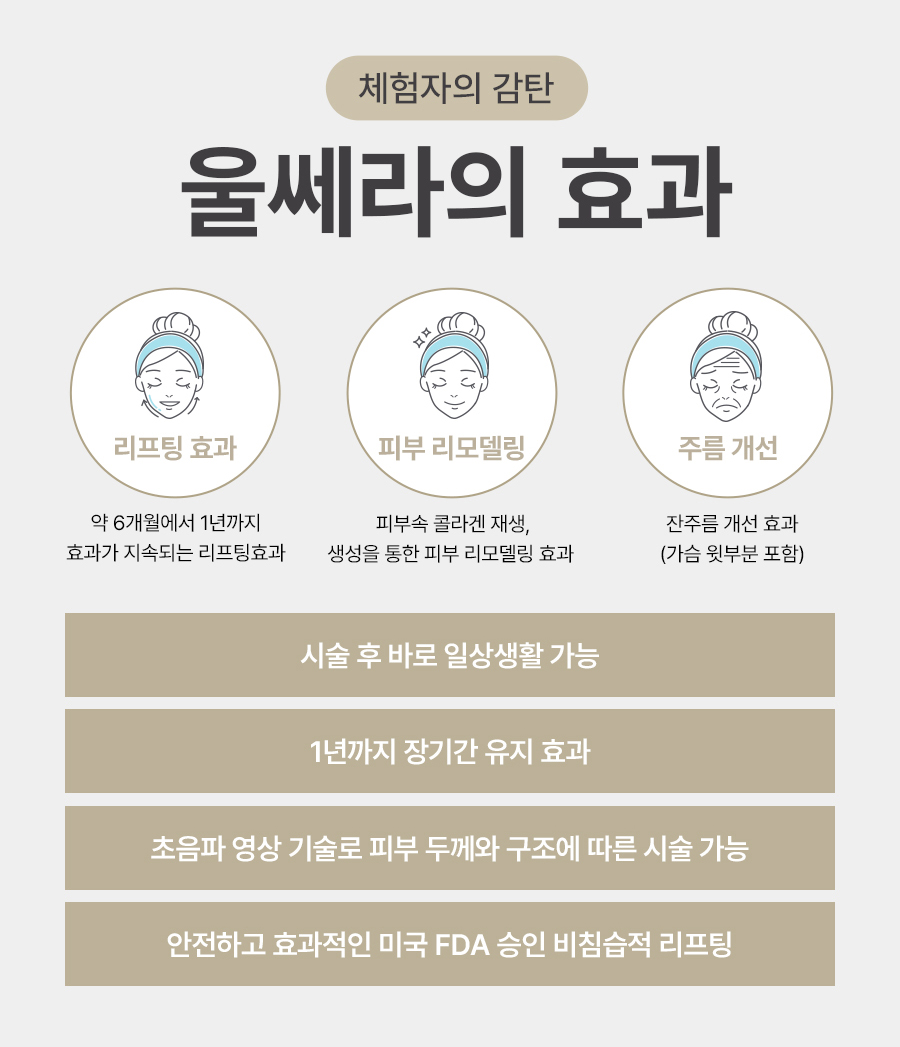
By delivering controlled ultrasound energy into the deep dermis and SMAS, Ultherapy creates precise thermal points. This stimulates your own collagen production over time, leading to gradual tightening and improved contour. There is no incision and no need for general anesthesia, which makes it attractive to overseas patients with limited time.
Typical treatment areas
In Dongtan 2 clinics, Ultherapy is commonly used for
- Jawline definition and early jowls
- Mild double chin and upper neck
- Cheeks and midface to soften nasolabial folds
- Marionette line area around the mouth corners
- Neck laxity and fine lines
- Sometimes the brow and upper eyelid area for a subtle eye opening effect
3D Ultherapy concept
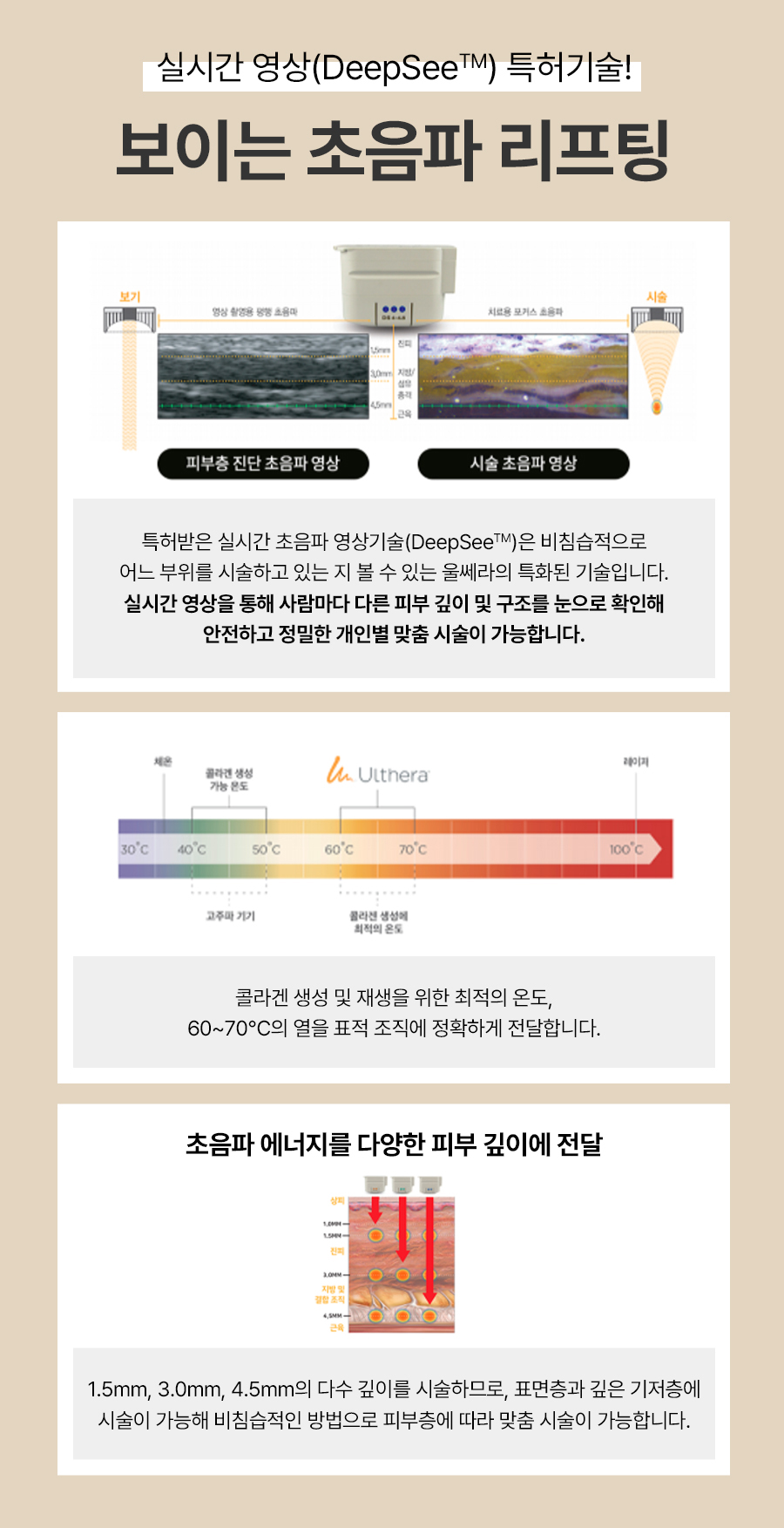
3D Ultherapy describes individualized planning that adjusts treatment depth, area zoning, and energy settings to address different tissue layers and contours rather than applying a single uniform pattern.
Depth. Different cartridges deliver energy at different depths, for example into the SMAS, deeper dermis, or more superficial layers. An experienced doctor selects and combines cartridges according to your skin thickness, fat volume, and degree of laxity in each zone.
Area. The face and neck are divided into detailed zones such as lateral cheek, pre‑jowl area, submental area, and upper neck. The doctor maps out which areas need stronger lifting and which need gentler treatment.

Energy lines. The number of lines, their density, and direction are adjusted to create a three‑dimensional lifting effect. This includes taking into account facial asymmetry, bony landmarks, and areas where important nerves pass.
Because 3D Ultherapy requires an understanding of facial anatomy and ultrasound imaging, it is typically planned and performed by dermatology specialists rather than delegated to non‑physician staff.
Why dermatologist‑performed Ultherapy matters
In Dongtan 2 New Town, some clinics advertise dermatologists with university affiliations or experience using multiple lifting devices, but such claims should be verified for each clinician—check licenses, stated affiliations, and specific experience directly with the clinic before scheduling treatment.
When Ultherapy is performed by such specialists, several points are different from general aesthetic centers.
Accurate candidate selection. The doctor can judge whether Ultherapy alone is likely to help or whether you would benefit more from other options such as Thermage FLX, Shurink, thread lifting, fillers, or fat‑dissolving injections under the chin. This avoids disappointment from choosing the wrong treatment.
Anatomy‑based planning. Knowledge of nerves, bone, and fat compartments allows the doctor to adjust depth and energy safely, especially in thin areas like the forehead, temple, and lower eyelid region.
Device choice and combination. Because these clinics use a wide range of devices, they can suggest a realistic combination plan, for example Ultherapy for structural lift, Thermage FLX for overall tightening and texture, or threads for more mechanical lifting in selected areas.
Safety and complication management. Although Ultherapy is generally safe, improper technique can lead to temporary nerve irritation, bruising, or uneven contour. A dermatologist with laser and lifting experience is better equipped to minimize risks and manage any side effects.
Who may consider Ultherapy in Dongtan 2
Good candidates
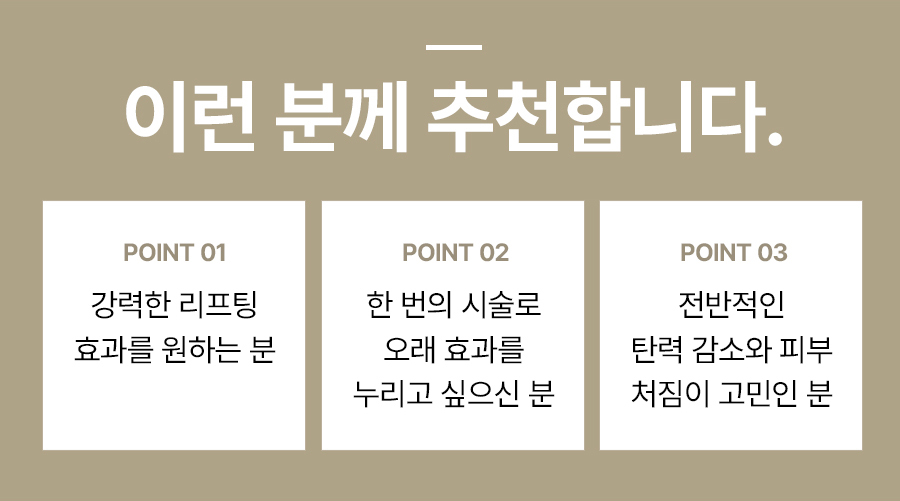
Ultherapy is usually recommended for people with
- Mild to moderate skin laxity rather than very heavy sagging
- Early jowls or a soft jawline
- Mild double chin or fullness under the chin
- Sagging around the mouth corners and marionette lines
- Fine lines and crepey skin on the neck or lower face
- Desire for lifting and tightening but not ready for surgery
It is also often used as maintenance after previous lifting procedures, such as thread lifts or Thermage, to prolong and support the results.
Ultherapy can be suitable for international patients in their late 20s to 60s, depending on skin quality and aging speed. Younger patients may use it preventively to maintain jawline and cheek support, while older patients may use it as a non‑surgical alternative when surgery is not desired.
Who may not be ideal for Ultherapy alone
Ultherapy may be less effective when
- There is very heavy sagging and large amounts of loose skin
- The lower face has thick fat pads and a bulky double chin
- There is significant volume loss that needs fillers rather than tightening
- The patient expects a facelift‑level change from a single non‑surgical session
In these situations, a dermatologist in Dongtan 2 may recommend a combination plan, such as Ultherapy plus thread lifting, or Ultherapy plus fat‑dissolving injections under the chin, or may suggest that surgical options would be more appropriate.
How Ultherapy is planned and performed
Consultation and assessment process
For international patients, the process usually starts with an online consultation before you travel to Korea.
Step 1. Online consultation. You send photos, medical history, information about medications, and details of previous procedures. The doctor reviews whether Ultherapy seems suitable and suggests a preliminary plan.
Step 2. In‑clinic consultation. When you arrive in Dongtan 2, you meet the dermatologist for a face‑to‑face assessment. The doctor checks skin thickness, fat distribution, degree of laxity, and any asymmetry. They also review your expectations and explain realistic outcomes.
Step 3. Treatment selection. Based on your condition, the doctor may recommend 3D Ultherapy alone or a combination with other devices such as Thermage FLX, Shurink, or thread lifting. For example, Ultherapy may be used for deeper lifting, while Thermage FLX focuses on texture and superficial tightening.
Step 4. Pain control and schedule. The doctor explains pain control options, such as topical anesthetic cream, oral pain medication, or cooling, and discusses how many days you should allow for any mild swelling or tenderness before major events.
Step 5. Cost estimate and plan. You receive a clear cost estimate and treatment plan, including the expected number of lines or areas. In reputable Dongtan 2 clinics, these fees are disclosed transparently as non‑reimbursed treatments under local medical regulations.
Procedure steps on treatment day
On the day of Ultherapy, the typical flow is
Cleansing and marking. Your skin is thoroughly cleansed. The doctor or assistant marks treatment areas and guiding lines on your face and neck.
Anesthetic application. Topical anesthetic cream is applied and left on for a sufficient time. In some cases, oral pain control is also provided, depending on your pain tolerance and medical history.
Ultrasound gel and imaging. After removing the cream, ultrasound gel is applied. The doctor uses real‑time ultrasound imaging to confirm that the target layer (such as SMAS or deep dermis) is clearly visualized before delivering energy.
Delivery of ultrasound shots. The doctor follows the pre‑planned lines, adjusting depth and energy for each zone. Bony areas like the jawline may feel more sensitive. Communication during the procedure helps the doctor adjust pacing and comfort measures.
Cooling and soothing care. After the session, cooling packs and soothing products may be applied. There is no incision, and most patients can return to daily activities immediately.
Pain, downtime, and side effects
Pain and discomfort
Discomfort during Ultherapy varies by individual and by area. The jawline, cheekbone, and forehead can feel sharper sensations because the ultrasound energy is delivered close to bone.
With proper topical anesthetic, oral pain control when appropriate, and good technique, most patients find the procedure tolerable. If you are very sensitive to pain, discuss this clearly during your online consultation so the clinic can plan suitable measures.
Downtime
Ultherapy is known for minimal downtime, which is important for overseas visitors.
You may experience
- Mild redness for a few hours
- Light swelling or puffiness for a few days
- Tenderness or slight soreness when touching or chewing, lasting up to 1–2 weeks
Most patients can apply makeup the next day and continue normal work and social activities. It is still wise to schedule the procedure at least a few days before important events, especially if you are prone to swelling or bruising.
Possible side effects
Common temporary effects include redness, swelling, tingling, and tenderness. These usually resolve on their own.
Rare but important risks include
- Bruising along the treated lines
- Temporary numbness or nerve irritation
- Uneven contour if energy is not evenly distributed
Selecting a clinic that uses appropriate imaging, maintains equipment, and is staffed by experienced clinicians may help minimize risks such as temporary bruising, numbness, or prolonged tenderness; always confirm the clinic’s use of real‑time ultrasound imaging, staff qualifications, and safety procedures when evaluating providers.
Results, duration, and maintenance
When results appear
Some patients feel a slight immediate tightening due to initial tissue contraction. However, the main effect of Ultherapy comes from new collagen formation.
Collagen remodeling takes time. Most people notice gradual improvement from about 4–6 weeks, with clearer lifting and tightening around 2–3 months after treatment. The neck and jawline often show changes in contour and firmness.
How long results may last
Individual outcomes vary; discuss expected duration and follow‑up with your provider.
Results generally last around 12 months or longer, depending on
- Age and genetic factors
- Sun exposure and lifestyle habits such as smoking
- Baseline skin quality and collagen levels
Because aging continues, many patients repeat Ultherapy every 12–18 months as part of a long‑term anti‑aging plan.
Maintenance and combination strategies
In Dongtan 2 clinics with multiple devices, maintenance may be customized, for example
- Ultherapy every 12–18 months for structural support
- Thermage FLX in between for surface tightening and texture
- Shurink sessions for lighter maintenance in younger or milder cases
- Thread lifting for targeted mechanical lift in specific areas
- Injectables such as fillers or skin boosters to restore volume and improve skin quality
Your dermatologist can help prioritize which treatment to schedule first based on your travel plans and budget.
Comparison with Thermage FLX, Shurink, and threads
Ultherapy
Technology. Focused ultrasound.
Target. Deeper layers including SMAS and deep dermis.
Effect. Structural lifting and tightening, especially along the jawline, cheeks, and neck.
Comfort. Can be more uncomfortable than some other devices but offers strong deep‑layer stimulation.
Thermage FLX
Technology. Radiofrequency.
Target. Mainly dermis and subcutaneous tissue, more superficial than SMAS.
Effect. Overall skin tightening, pore and texture improvement, suitable for broader areas like full face and sometimes body.
Comfort. Usually moderate discomfort, often managed with cooling and pain control.
Shurink
Technology. High‑intensity focused ultrasound (HIFU) with generally lighter energy compared to Ultherapy.
Target. Similar layers but often used with lower intensity.
Effect. Good for mild laxity and maintenance, often more budget‑friendly.
Threads
Technology. Biodegradable lifting threads inserted under the skin.
Target. Mechanical lifting of sagging tissue.
Effect. More immediate visible lift in selected areas, but with its own recovery considerations such as bruising or stiffness.
In a Dongtan 2 clinic that offers all these options, the doctor can explain which combination best matches your skin condition, tolerance for downtime, and travel schedule, rather than pushing a single device for everyone.
How dermatologist‑run Ultherapy clinics in Dongtan 2 differ
Clinics in Dongtan 2 New Town operated by dermatology specialists often have the following characteristics
These backgrounds support careful treatment planning and safety‑focused practice.
In addition, such clinics typically
Ask the clinic to:
- Confirm the Ultherapy device make and maintenance records or provide manufacturer documentation.
- Disclose non‑reimbursed treatment fees clearly in accordance with local medical standards.
- Explain who will perform the procedure (a doctor or other trained staff) and clarify their qualifications.
- Describe available lifting devices and injectable options so you can compare and discuss a customized treatment plan.
For international patients, this means you can expect a medical consultation rather than a sales‑driven discussion.
Practical tips for choosing a safe Ultherapy clinic in Dongtan 2
When comparing clinics online before your trip, consider the following checklist
Verify the doctor’s specialty. Confirm that the procedure is performed by a dermatology specialist, not only supervised.
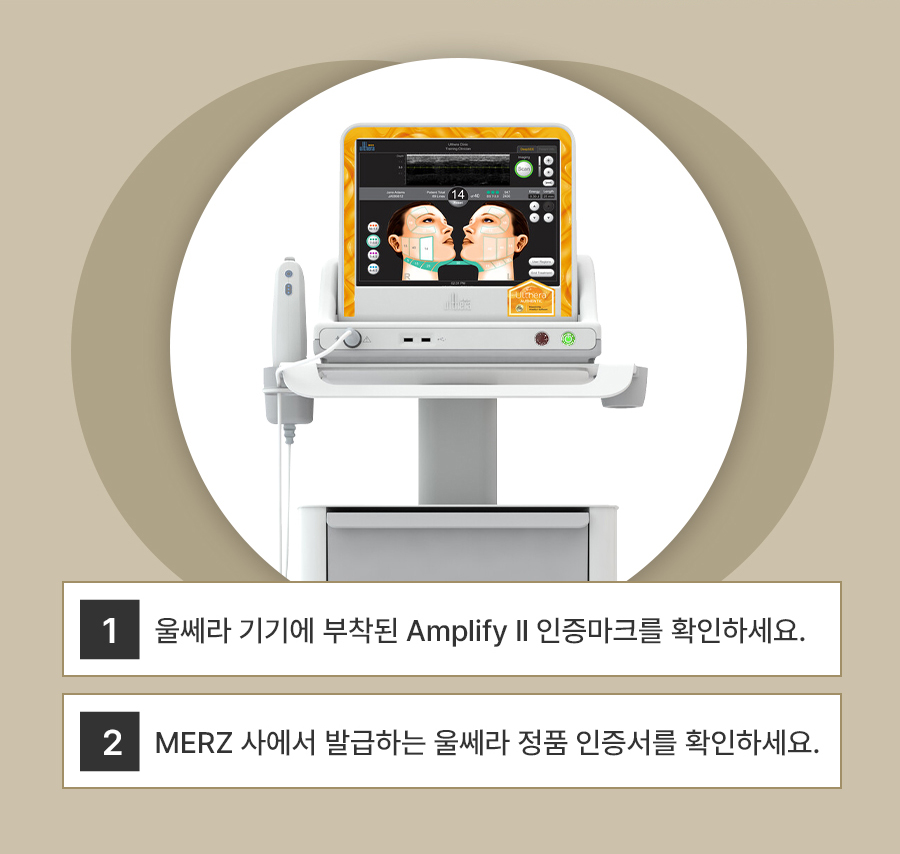
Ask about the device. Check that the clinic uses genuine Ultherapy equipment and not unverified copies. You can ask for the brand name and whether real‑time ultrasound imaging is used.
Confirm shot planning. Ask how they decide the number of lines and energy settings. A serious clinic will explain that these are customized based on your face, not a one‑number package for everyone.
Review other devices. Clinics with Thermage FLX, Shurink, and thread lifting can offer alternatives if Ultherapy is not ideal for you.
Discuss pain control and downtime. Ask what pain management is available and how many days you should allow before returning to work or flying back.
Clarify follow‑up. Ask whether a follow‑up visit or online check‑in is available after you return home.
Be cautious of extremely low prices that seem far below the general market level, as this may indicate non‑genuine devices, very low shot counts, or procedures done by non‑physicians.
Online consultation and pre‑visit preparation
Before visiting Korea, it is helpful to arrange an online consultation with a Dongtan 2 clinic.
Prepare the following
Clear photos of your face and neck from front and both sides in good lighting
A list of your medications and supplements
History of previous procedures such as fillers, threads, laser treatments, or surgery
Any medical conditions such as autoimmune disease, bleeding disorders, or implanted devices
Your desired treatment date range and length of stay in Korea
During the online consultation, ask the doctor
- Whether Ultherapy alone is recommended or if a combination is better
- What kind of improvement you can realistically expect
- How many days of mild swelling or tenderness are likely
- When you can safely fly after treatment (usually soon, but individual advice is important)
Expected visit timeline for Ultherapy in Korea
A typical schedule for overseas patients visiting Dongtan 2 might look like this
Day 1. Arrival in Korea and check‑in at accommodation in or near Dongtan 2.
Day 2. In‑clinic consultation, facial analysis, and, if agreed, Ultherapy treatment on the same day.
Day 3–4. Mild swelling or tenderness may be present, but most daily activities and sightseeing are possible.
Day 5–7. Many patients feel comfortable flying back home. Tenderness may persist slightly but is usually manageable.
Week 4–12. Gradual lifting and tightening become more noticeable. This period will take place after you have returned home, so online follow‑up with the clinic can be useful.

Aftercare and lifestyle tips
After Ultherapy, basic care is simple
You can usually wash your face and apply makeup the next day, unless your doctor advises otherwise.
Avoid very hot saunas, intense facial massage, or strong pressure on treated areas for a few days.
Use sunscreen daily to protect new collagen from UV damage.
Maintain a healthy lifestyle, including good sleep, balanced diet, and not smoking, to support collagen production.
If you notice unusual pain, prolonged numbness, or visible asymmetry, contact the clinic promptly. Many Dongtan 2 clinics offer online follow‑up for international patients.
Frequently asked questions
Is Ultherapy very painful
Pain perception varies. Some people describe Ultherapy as uncomfortable, especially along the jawline and bony areas, while others find it tolerable with proper anesthetic. In Dongtan 2 clinics, topical anesthetic cream and, when appropriate, oral pain control are used. During consultation, you can discuss your pain tolerance so the doctor can adjust energy settings and comfort measures.
How often should I repeat Ultherapy
Most patients repeat Ultherapy every 12–18 months, depending on age, skin condition, and how quickly they feel laxity returning. Some choose to alternate Ultherapy with other treatments such as Thermage FLX or Shurink. Your dermatologist can suggest a long‑term plan based on your goals and how often you can visit Korea.
Can Ultherapy replace a surgical facelift
Ultherapy can improve laxity, contour, and definition of the jawline and neck, but it does not replace the results of a surgical facelift. It is most effective for mild to moderate sagging and for people who prefer non‑surgical options or are not ready for surgery. In cases of very heavy sagging, a dermatologist may recommend surgical consultation or combined non‑surgical approaches.
Is Ultherapy safe for overseas patients with limited time
Ultherapy is generally considered safe with minimal downtime, which suits overseas visitors. Most patients can resume normal activities quickly and fly within a few days. However, as with any medical procedure, individual risks exist, and a detailed consultation is essential. Choosing an experienced dermatologist‑run clinic in Dongtan 2 that uses genuine Ultherapy equipment and provides clear aftercare instructions is important for safety.
Soft call to action
If you are planning a trip to Korea and are considering Ultherapy in the Dongtan 2 New Town area, an online consultation can help you understand whether 3D Ultherapy is suitable for your face and neck, how it can be combined with other treatments, and how to schedule your visit efficiently. Preparing your photos and medical information in advance allows the dermatologist to design a realistic, safety‑focused plan tailored to your travel dates and expectations.
- 공유 링크 만들기
- X
- 이메일
- 기타 앱


댓글
댓글 쓰기