Dongtan Ultherapy: Face and Neck Lifting Guide at a Dongtan Dermatology Clinic
- 공유 링크 만들기
- X
- 이메일
- 기타 앱

Direct answer summary
If you are searching for Ultherapy in Dongtan, you are usually looking for a non‑surgical way to lift and tighten the face and neck. Ultherapy uses focused ultrasound energy to stimulate your own collagen in deeper layers of the skin, especially the SMAS layer and deep dermis. At a dermatology clinic in Dongtan New Town, dermatologists with strong academic and laser backgrounds personally assess your skin, plan a three‑dimensional Ultherapy protocol, and perform the treatment with attention to safety, comfort, and realistic expectations. and
Treatment overview
Ultherapy is a non‑invasive lifting procedure that uses focused ultrasound energy rather than surgery or injections. During treatment, the device delivers tiny points of heat at controlled depths under the skin. These thermal points trigger collagen remodeling, which gradually tightens and lifts the tissue.
Ultherapy uses focused ultrasound energy delivered to deeper layers of the skin and underlying support structures. By treating multiple depths in a planned pattern, it can gradually improve skin laxity, jawline definition, and fine wrinkles over time.
In this Dongtan clinic, a three‑dimensional Ultherapy approach is used. That means the dermatologist combines different cartridges and energy lines at various depths to create a layered, three‑dimensional lifting effect for the face and neck, rather than just a single pass at one level. When needed, Ultherapy is combined with other lifting or skin‑quality treatments to match your skin type and goals.
How Ultherapy works
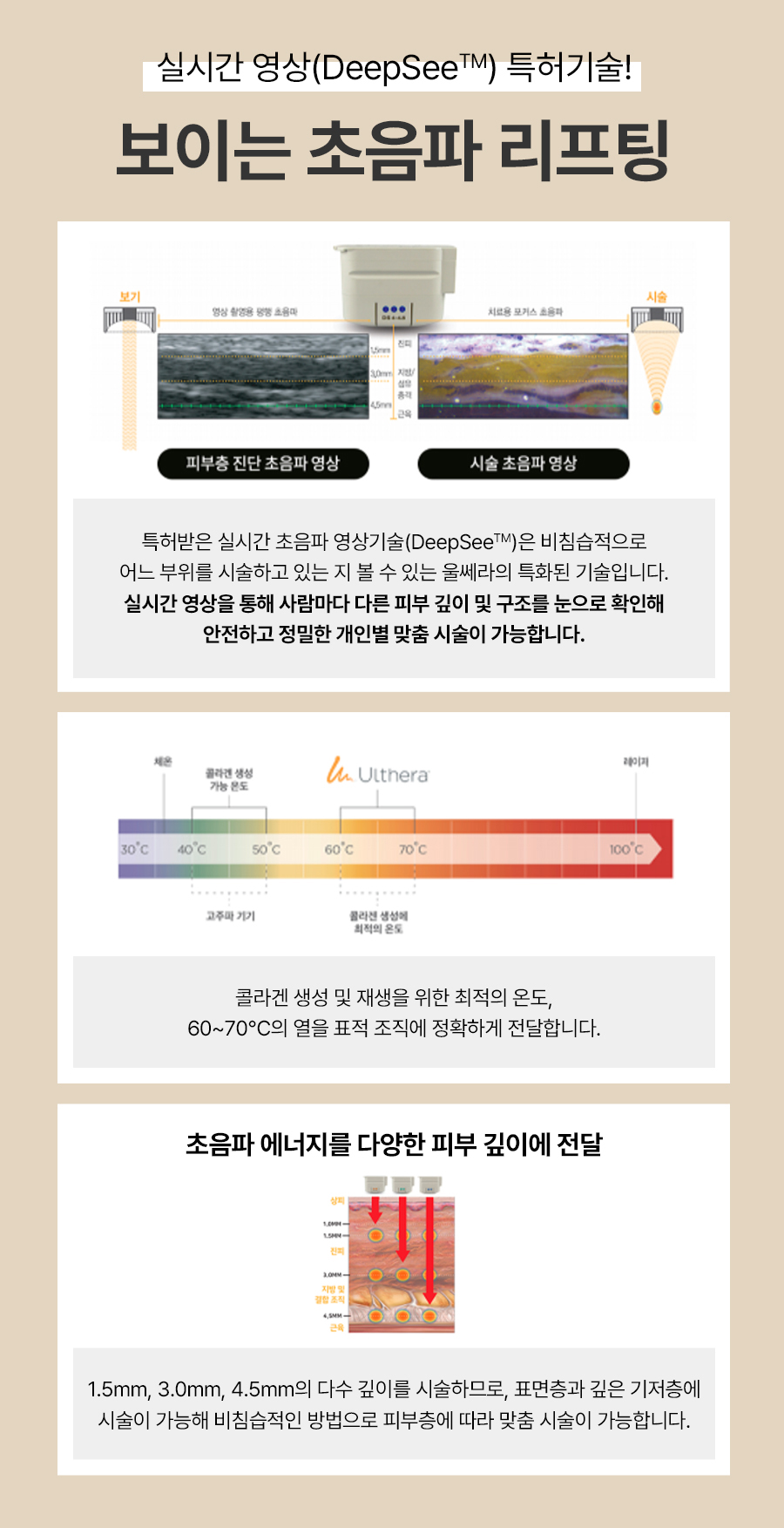
Ultherapy relies on focused ultrasound waves. These waves pass through the surface of the skin without damaging it, then converge at a precise point below the surface. At that focal point, the energy converts to localized heat that stimulates collagen contraction and new collagen formation.
The dermatologist can choose different cartridges that focus at different depths, for example in the deep dermis, the subcutaneous layer, and the SMAS layer. By mapping your facial anatomy and planning the line placement, the doctor can target areas such as the lower face, jawline, and neck bands.
Because the surface of the skin is not removed or ablated, there is no open wound. The main change happens gradually as your body responds to the thermal stimulation by producing new, stronger collagen fibers.

Who may consider Ultherapy in Dongtan
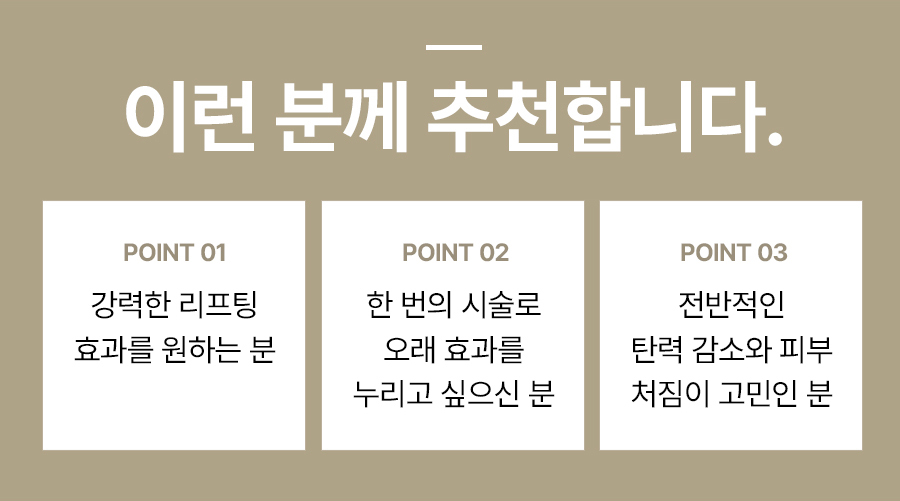
People usually consider Ultherapy when they begin to notice sagging or loss of definition but are not ready for surgery. Typical candidates include men and women in their 30s to 60s who see:
- - Sagging or heaviness in the cheeks
- - A softer, less defined jawline
- - Nasolabial folds and marionette lines becoming deeper
- - Mild neck bands or horizontal neck lines
- - General loss of elasticity in the lower face and neck
Ideal candidates have mild to moderate skin laxity and understand that Ultherapy gives a natural, gradual lift rather than a dramatic surgical change. The skin should have enough thickness and collagen potential to respond to the treatment.
Some people may not be suitable for standard Ultherapy or may need a combined approach. This can include those with very thin skin, severe laxity, very heavy jowls, or certain medical conditions. In these cases, the dermatologist may recommend alternative or additional treatments such as radiofrequency tightening, thread lifting, or injectables. A face‑to‑face consultation is important to decide safely.
Dermatology expertise in Dongtan
The Dongtan clinic providing Ultherapy is a dermatology center in Dongtan New Town, on the 3rd floor of a mixed‑use building along a main road. It offers medical dermatology and aesthetic services, including care for psoriasis, vitiligo, acne and scars, vascular redness, hair and scalp issues, body treatments, injectables, and multiple lifting devices.
Two representative dermatologists lead the clinic. Both graduated from Kyung Hee University School of Medicine and serve as external faculty in the dermatology department at Kyung Hee University Medical Center. One has experience as head of dermatology at the presidential medical office in Seoul and ranked first in the first‑stage national dermatology board exam. The other completed training at the UCI Beckman Laser Institute and participates actively in several dermatology societies, including psoriasis and vitiligo societies.
This background is particularly relevant for Ultherapy, which is an energy‑based procedure. Understanding skin structure, facial anatomy, and laser and ultrasound physics helps the doctors choose appropriate candidates, set parameters carefully, and place energy lines accurately. At this clinic, dermatologists, not non‑physician staff, plan and perform or closely supervise the Ultherapy procedure.
Indications and realistic expectations
Ultherapy is considered when you want visible but natural lifting and tightening without incisions or general anesthesia. It can be helpful if:
- - You notice early jowls or a blurred jawline
- - Your cheeks look heavier and pull downward
- - Lines around the mouth and nose deepen when you are relaxed
- - Your neck shows mild sagging or banding
- - You want to maintain results after previous lifting treatments
However, Ultherapy does not replace a surgical facelift. It cannot remove large amounts of excess skin or reposition very heavy tissue. The goal is to refresh and support your existing structure, not to change your face shape completely.
During consultation, the dermatologist will explain what degree of improvement is realistic for your age, skin thickness, and degree of sagging. For some, the plan may include Ultherapy plus other procedures such as Thermage FLX, skin‑tightening lasers, or volume‑adjusting injectables to aim for a balanced result.
Your Ultherapy journey at a Dongtan dermatology clinic
Pre‑treatment consultation
Your visit usually starts with a consultation with a board‑certified dermatologist. The doctor will:
- - Listen to your main concerns and desired changes
- - Examine your face and neck for skin laxity, thickness, and asymmetry
- - Review your medical history, medications, and any previous procedures
- - Discuss whether Ultherapy is suitable or if another option fits better
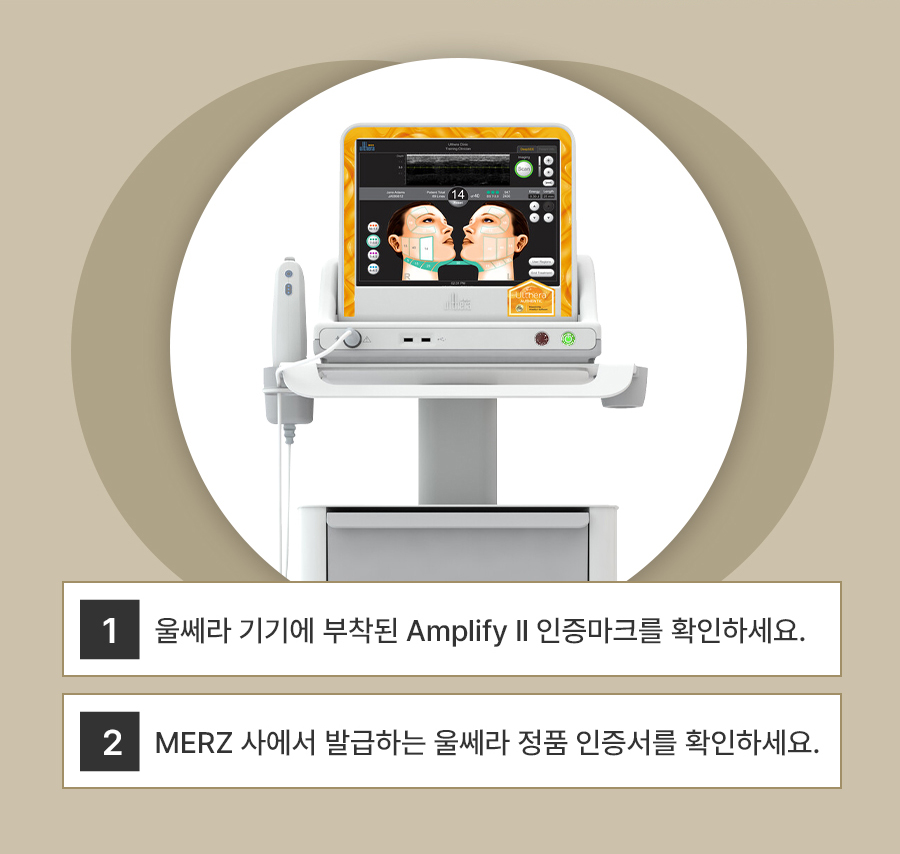
Photography is often done to document your starting point. The dermatologist may compare Ultherapy with other options such as Thermage FLX, other HIFU devices, thread lifting, or injectables, explaining the pros and limitations of each for your case.
Treatment planning
If Ultherapy is chosen, the doctor will design a personalized plan. This includes:
- - Selecting treatment areas such as full face, lower face, jawline, and neck
- - Choosing which depth cartridges to use and in what pattern
- - Deciding the number of lines and energy levels based on your skin
At this clinic, a three‑dimensional Ultherapy protocol is used. That means the doctor intentionally overlaps different depths and vectors to create a layered lifting effect, rather than simply following a standard template.
On the treatment day
On the day of Ultherapy, you can usually eat and drink normally unless instructed otherwise. The process generally follows these steps:
- Cleansing of the face and neck to remove makeup, sunscreen, and oil
- Application of topical anesthetic cream to reduce discomfort
- Possible oral pain control if you are very sensitive, after discussion with the doctor
- Marking of key areas and application of ultrasound gel
- Delivery of Ultherapy shots while the dermatologist monitors your comfort and adjusts technique when needed
You may feel brief, sharp sensations of heat or tingling at each shot, especially along bony areas or where the skin is thinner. The team will communicate with you throughout the procedure and can pause or adapt settings to balance comfort and effectiveness.
Immediate post‑care
Right after Ultherapy, the skin may look slightly red or feel warm. Cooling may be applied if necessary. Before you leave, the staff will explain:
- - What sensations are normal, such as mild tightness or tenderness
- - How to care for your skin over the next few days
- - The importance of gentle skincare and sun protection
Most people can apply light makeup the same day or the next day and return to work or sightseeing immediately, which is helpful for international visitors.
Follow‑up and combination treatments
The main lifting effect appears gradually, so a follow‑up visit is often scheduled a few months later. At that time, the dermatologist will:
- - Compare your current appearance with your baseline photos
- - Check skin quality, elasticity, and symmetry
- - Discuss whether additional treatments would be helpful
Depending on your response, the plan may include complementary options such as Thermage FLX for dermal tightening, skin‑tightening lasers for texture, or injectables for volume balance. The aim is to maintain a natural look while supporting the collagen you gained from Ultherapy.
Expected results and timeline
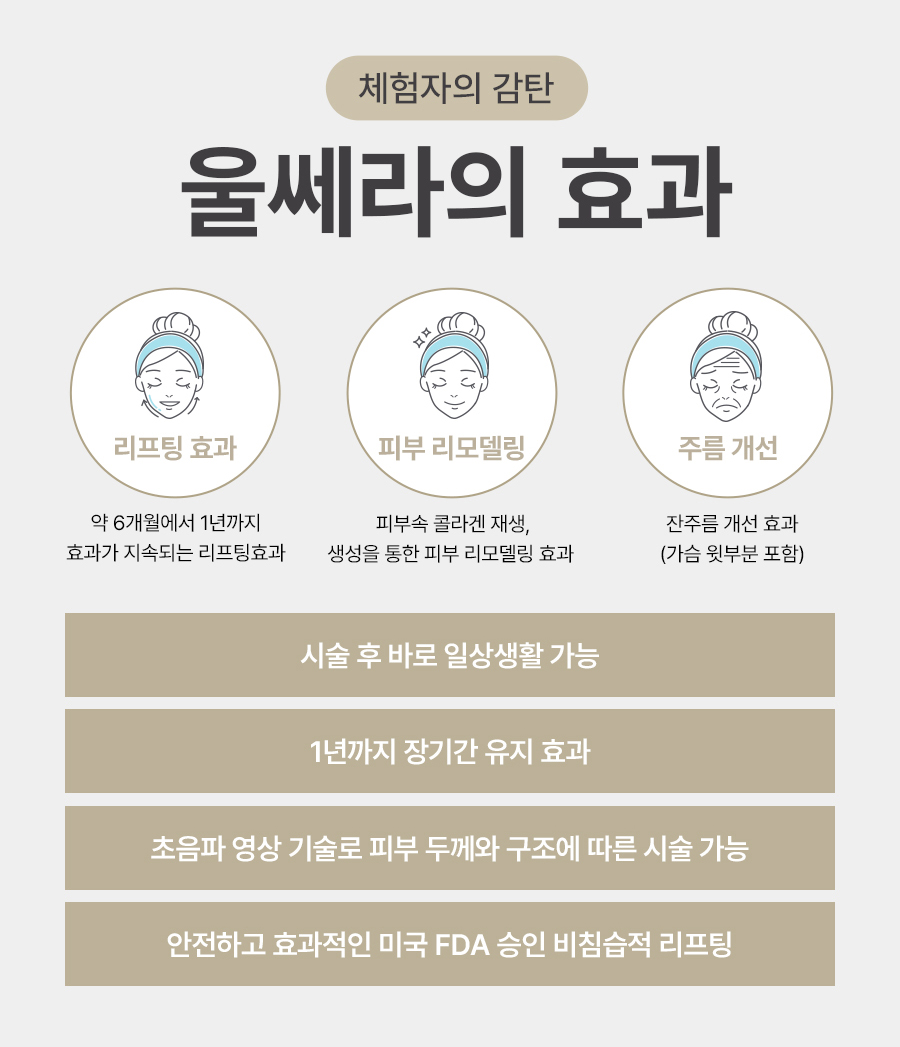
Many patients feel a subtle sense of tightness or lifting immediately after Ultherapy due to initial tissue contraction. However, the main changes develop over time as new collagen forms.
A typical timeline may look like:
Visible improvements in jawline definition, cheek support, and mild sagging around the mouth often develop gradually, with continued collagen remodeling over time. The timing and duration of results vary by individual; your dermatologist will discuss expected timelines and maintenance during consultation.
The results are usually described as natural and refreshed rather than dramatic. Friends may comment that you look well‑rested or firmer, without easily guessing that you had a procedure.
Sun protection, healthy habits, and regular skincare can help maintain the benefits.
During consultation, the dermatologist will explain that results vary between individuals and that Ultherapy cannot stop the aging process. Repeat treatments or maintenance sessions may be suggested after a certain period.
Pain, downtime, and side effects
Pain and discomfort
Ultherapy can be uncomfortable because the energy targets deeper layers, including the SMAS. Sensations may include brief stinging, heat, or a deep ache during each shot. To manage this, the clinic uses topical anesthetic cream and, when appropriate, oral pain control.
The dermatologist also adjusts energy settings and line patterns to reduce discomfort while aiming to maintain effectiveness. Communicating your pain level during the procedure helps the team respond in real time.
Downtime
Most patients return to daily activities immediately after Ultherapy. There is usually no need for bandages or special dressings. Makeup and sunscreen can often be applied the same day or next day, which is convenient if you are traveling or working.
Common temporary side effects
Temporary effects may include:
- - Mild redness that fades within hours to a day
- - Light swelling or puffiness for a few days
- - Tenderness when touching treated areas
- - Slight numbness or tingling that usually resolves within days to a couple of weeks
These are generally mild and self‑limited. The clinic will give you instructions on what to watch for and when to contact them.
Rare risks
Although uncommon, more serious side effects can occur, such as prolonged nerve‑related symptoms, uneven contour, or persistent pain. These risks may be reduced when the procedure is performed by experienced dermatologists who understand facial anatomy, nerve pathways, and ultrasound mapping.
If you feel unusual weakness, severe pain, or prolonged numbness after treatment, you should contact the clinic promptly for assessment.
Comparison with other lifting options
In Dongtan, you may see several lifting options advertised. At this dermatology clinic, the main technologies used alongside Ultherapy include Thermage FLX, other HIFU devices, and thread lifting.
Ultherapy
- - Focused ultrasound reaching SMAS and deep dermis
- - Used for lifting and tightening with gradual, natural‑looking changes
- - Considered for mild to moderate laxity when you prefer a non‑surgical option
Thermage FLX
- Radiofrequency energy focused on the dermis
- Often used for overall texture, pore appearance, and skin firmness
- Can complement Ultherapy by improving surface quality while Ultherapy works on deeper support
Thread lifting
- Uses absorbable threads to mechanically lift tissue
- Provides more immediate repositioning of sagging areas
- Has a different risk and downtime profile, including possible bruising, swelling, or thread‑related issues
The clinic does not rely on a single device for everyone. Instead, the dermatologists evaluate your skin thickness, degree of sagging, and personal preferences, then recommend Ultherapy alone or in combination with other methods.
Safety and expertise
Ultherapy is highly operator‑dependent. The same machine can give very different results depending on the practitioner’s understanding of anatomy, energy settings, and line placement.
At this Dongtan clinic, board‑certified dermatologists with university teaching roles and laser‑institute training directly plan and perform or supervise Ultherapy. Their experience with complex skin diseases and various energy‑based devices supports careful patient selection and parameter setting.
The clinic maintains a structured approach, including:
- Explaining indications, benefits, and limitations clearly
- Disclosing non‑reimbursed treatment fees in advance
- Keeping before‑and‑after photo records for registered members, with appropriate privacy protection
For international patients, this systematic process can provide reassurance when choosing a clinic in a foreign country.
Practical information for Dongtan patients and visitors
Location and access
The clinic is located in Dongtan New Town in Hwaseong, on the 3rd floor of a commercial building along a main road. This area is a planned city with convenient access from Seoul and nearby regions by public transport and car.
Clinic hours
The clinic offers weekday and Saturday hours, with extended hours on Friday to accommodate working patients. There is a lunch break in the early afternoon. It is closed on Sundays and public holidays, so international visitors should plan travel dates accordingly.
Online reservation is available on specific weekdays through a major local portal, which can be convenient if you are still abroad. For overseas patients, it is helpful to send basic information and photos in advance when possible.
Online consultation and pre‑visit preparation
Before you travel to Korea, you can often start with an online consultation. To make this efficient, prepare the following:
- Clear photos of your face and neck from the front and both sides, in natural light
- A brief description of your main concerns, such as jowls, neck sagging, or fine lines
- Your age, medical history, and any previous treatments or surgeries in the face or neck area
- A list of medications, including blood thinners or supplements
During the online consultation, ask about:
- - Whether you are a suitable candidate for Ultherapy
- - What kind of improvement is realistic for you
- - How many sessions are usually recommended
- - How long you should stay in Korea after treatment
This early communication helps the clinic schedule your in‑person consultation and procedure efficiently within your travel dates.
Expected Korea visit timeline for Ultherapy
For most overseas visitors, Ultherapy can be completed in a short stay. A typical schedule might look like this:
- Day 1: In‑person consultation, skin assessment, and photography. If both you and the doctor agree, Ultherapy may be performed on the same day, depending on the schedule.
- Day 2 to 3: Light check‑up if needed, or you can already enjoy sightseeing or business activities. Most people feel comfortable in public immediately.
- Day 4 and beyond: You can usually travel to other cities or return home. The main results will develop after you return, so online follow‑up using photos is often possible.
If you plan to combine Ultherapy with other treatments such as Thermage FLX, lasers, or injectables, you may need to allow more time or separate sessions. The clinic can advise you based on your itinerary.
Aftercare for international patients
After Ultherapy, aftercare is generally simple, but it is still important to follow instructions, especially if you will be flying soon.
Basic aftercare includes:
- Use gentle cleansers and moisturizers for a few days
- Apply broad‑spectrum sunscreen daily and avoid excessive sun exposure
- Avoid very hot saunas or intense facial massages for a short period, as advised by the doctor
- Monitor for unusual pain, weakness, or prolonged numbness and contact the clinic if they occur
If you live overseas, ask how to reach the clinic by email or messaging app in case you have questions after returning home. Sending clear photos and a description of your symptoms helps the doctor advise you from a distance.
Frequently asked questions
Is Ultherapy in Dongtan suitable for first‑time lifting treatment?
Ultherapy is often chosen by people trying lifting treatments for the first time, especially if they have mild to moderate sagging and prefer a non‑surgical option. Because the effect is gradual and natural, it can be a comfortable starting point.
During consultation, the dermatologist will check your skin thickness and laxity to see if Ultherapy alone is likely to be enough or if you might benefit more from another option such as Thermage FLX or thread lifting. First‑time patients usually appreciate a clear explanation of what to expect over the next few months.
How painful is Ultherapy and can I manage it while traveling?
Most people describe Ultherapy as uncomfortable but tolerable, with brief sharp or hot sensations during each shot. The clinic uses topical anesthetic cream and can offer additional pain control when appropriate.
If you are traveling, it is helpful to schedule the procedure on a day when you can rest afterward if needed. However, many patients go out for meals or light activities the same day. Mild tenderness can continue for days to weeks, but it usually does not interfere with normal travel plans.

How long do Ultherapy results last and when should I repeat it?
The lifting and tightening effect from Ultherapy is often maintained for around 1 to 2 years, depending on your age, skin quality, and lifestyle. Some people choose to repeat the treatment every 12 to 18 months as part of a maintenance plan.
Your dermatologist will assess your response at follow‑up and suggest an appropriate interval. Good sun protection, healthy sleep, and avoiding smoking can help you maintain results longer.
Can Ultherapy be combined with Thermage or injectables in one trip to Korea?
Many patients combine Ultherapy with other treatments such as Thermage FLX, skin‑tightening lasers, or injectables during a single trip. The exact order and timing depend on your skin condition and schedule.
For example, Ultherapy may be done first to support deeper structures, then Thermage or lasers for surface texture, and injectables for volume correction. Your dermatologist will design a sequence that is safe and practical for your travel dates, explaining any necessary intervals between procedures.
Soft call to action
If you are considering Ultherapy in Dongtan and want a medically guided, non‑surgical approach to lifting and tightening, an online consultation with a Dongtan New Town dermatology clinic can be a helpful first step. Prepare your photos and questions about expected effects, pain control, combination plans, and follow‑up schedule.
By discussing these points in advance with board‑certified dermatologists experienced in energy‑based treatments, you can plan your visit to Korea more confidently and choose a treatment plan that matches your skin, your timeline, and your expectations.
- 공유 링크 만들기
- X
- 이메일
- 기타 앱


댓글
댓글 쓰기