Dongtan lifting options for international patients at Hus-hu Dermatology Clinic Dongtan
- 공유 링크 만들기
- X
- 이메일
- 기타 앱
Dongtan lifting at a glance
If you are searching for Dongtan lifting options, you are probably hoping for a firmer jawline, softer nasolabial folds, or a tighter neck without surgery. In Dongtan, non-surgical lifting usually means treatments such as Ultherapy, Thermage FLX, Shurink, SkinTyte, thread lifting, and injectables like contouring fillers or skin boosters.
This guide explains how these lifting treatments work, who may consider them, how to prepare from overseas, what a typical visit to Korea looks like, and what aftercare is involved at a dermatology-led clinic such as Hus-hu Dermatology Clinic Dongtan.
You will not find promises of dramatic one-time changes here. Instead, the focus is on realistic, step-by-step improvement and choosing a plan that matches your age, skin laxity, and lifestyle.
What Dongtan lifting usually means
In Dongtan, lifting is a broad term for non-surgical procedures that aim to tighten skin and improve facial contours.
Common goals include:
A more defined jawline and reduced jowls
Softer nasolabial folds and marionette lines
Tighter skin on the cheeks and lower face
Improved neck and under-chin sagging
Overall firmer, more elastic skin
Rather than one universal solution, lifting often combines several methods. A dermatologist can mix energy-based devices, threads, and injectables to match your skin thickness, sagging pattern, and pain tolerance.
Overview of main lifting treatments
Ultherapy
Ultherapy uses focused ultrasound to reach deeper tissue layers and stimulate collagen production over time.
Typical target areas include the full face, jawline, under-chin area, and neck. Results appear gradually over two to three months and may continue to improve for several more months as new collagen forms.
Ultherapy is often chosen for people who want a deeper tightening effect with relatively long-lasting results and are comfortable with some treatment discomfort. It can be suitable for mild to moderate sagging.
Thermage FLX
Thermage FLX uses radiofrequency energy to heat the dermis and tighten collagen fibers. It also stimulates new collagen formation. Unlike ultrasound, Thermage focuses more on the skin’s mid to deep dermal layers.

It is commonly used for:
Full face tightening
Jawline and cheek contouring
Eyelid and under-eye skin firming in some treatment plans
Neck and sometimes body areas, depending on the clinic’s offerings
Results from Thermage FLX also develop gradually, often with visible changes over one to three months. It can be a good choice if your main concern is skin texture and firmness rather than a strong lifting of deeper tissues.
Shurink
Shurink is another ultrasound-based lifting device used widely in Korea. It delivers focused ultrasound energy to different depths of the skin and underlying tissue.
Shurink is often used for:
Jawline contouring and under-chin area
Cheek and lower face tightening
Mild lifting in younger patients or as a maintenance treatment
Compared with some other ultrasound devices, Shurink sessions can be relatively quick, and clinics may adjust the number of shots and energy level based on your skin condition and pain tolerance.
SkinTyte
SkinTyte uses broadband light combined with infrared energy to gently heat the dermis and stimulate collagen. It is generally considered a milder tightening option compared with deeper ultrasound or radiofrequency treatments.
SkinTyte may be used for:
Overall skin firmness and texture
Mild laxity in the lower face or neck
Maintenance after stronger lifting treatments
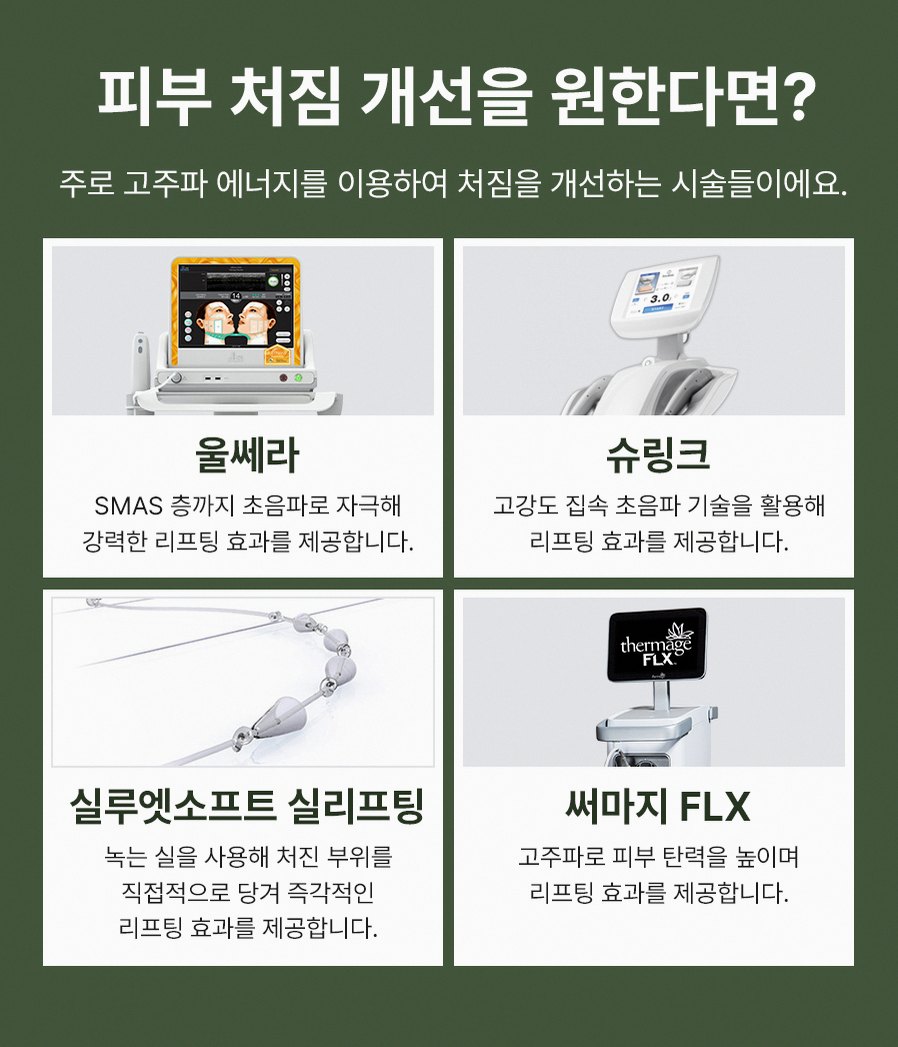
Because it is gentler, SkinTyte often requires multiple sessions in a series. It may suit people who prefer minimal downtime and have early or mild sagging.
Thread lifting
Thread lifting involves placing special dissolvable threads under the skin through fine needles or cannulas. These threads can have tiny barbs or cones that help lift and support sagging tissue.
Thread lifting is often chosen for:
Lifting the midface and cheek area
Improving jowls and jawline definition
Subtle brow lifting in some plans
Threads provide an immediate mechanical lift, and over time they also stimulate collagen as they gradually dissolve. Results and duration can vary depending on thread type, placement, and your skin condition.
Because it is more invasive than device-based treatments, thread lifting usually requires careful planning, local anesthesia, and more detailed aftercare instructions.
Injectables for lifting and contour
Injectable treatments can support lifting plans in several ways:
Volume restoration: Fillers can restore volume in the cheeks or temples, which indirectly lifts and supports the lower face.
Fine-line softening: Certain injectables can soften lines around the mouth and chin, improving the overall lifted look.
Skin quality: Skin boosters and collagen-stimulating injectables can improve elasticity and texture, making lifting results look more natural.
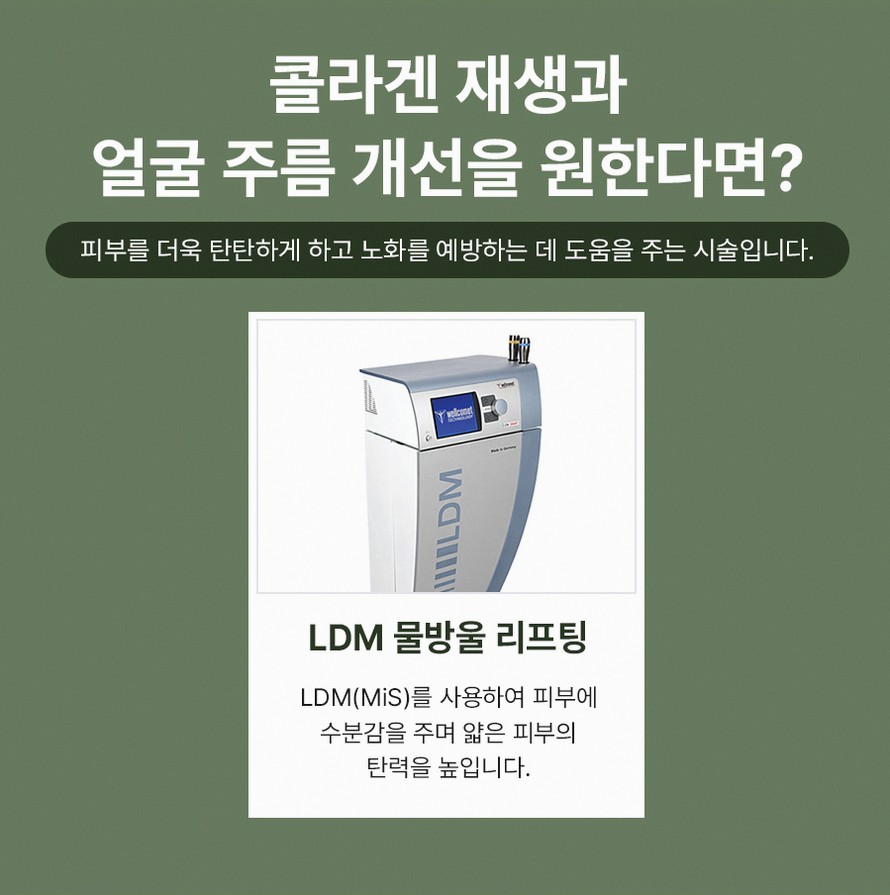
Injectables are highly customizable. A dermatologist may recommend small, strategic amounts rather than large volumes, especially for international patients who want a subtle and natural change.
Who may consider Dongtan lifting
Non-surgical lifting can be considered by a wide range of people, but it is not ideal for every situation.
You may consider these treatments if:
You notice mild to moderate sagging of the cheeks, jawline, or neck.
Your nasolabial folds and marionette lines are deepening.
You feel your face looks tired or heavier than before, even with enough sleep.
You prefer to avoid surgery and general anesthesia.
You can accept gradual improvement rather than an instant dramatic change.
You may need a different approach or more cautious planning if:
You have very severe sagging or large amounts of excess skin, where surgery might be more effective.
You have certain medical conditions, are pregnant, or are taking medications that affect healing or bleeding.
You have a history of keloid or hypertrophic scarring, especially for thread lifting.
In all cases, a direct consultation with a dermatologist is important. They can examine your skin thickness, elasticity, bone structure, and fat distribution to recommend a realistic plan.
How dermatologists customize lifting plans
A key advantage of a dermatology-led lifting plan is customization. Instead of recommending the same device to everyone, the dermatologist can combine methods.
Common combination strategies include:
Ultrasound plus radiofrequency: For example, combining Ultherapy or Shurink for deeper layers with Thermage FLX for dermal tightening.
Threads plus devices: Using thread lifting for mechanical lift and devices like SkinTyte or Thermage for skin quality and firmness.
Injectables plus lifting: Adding small amounts of filler or skin boosters to support structure and improve texture after device-based lifting.
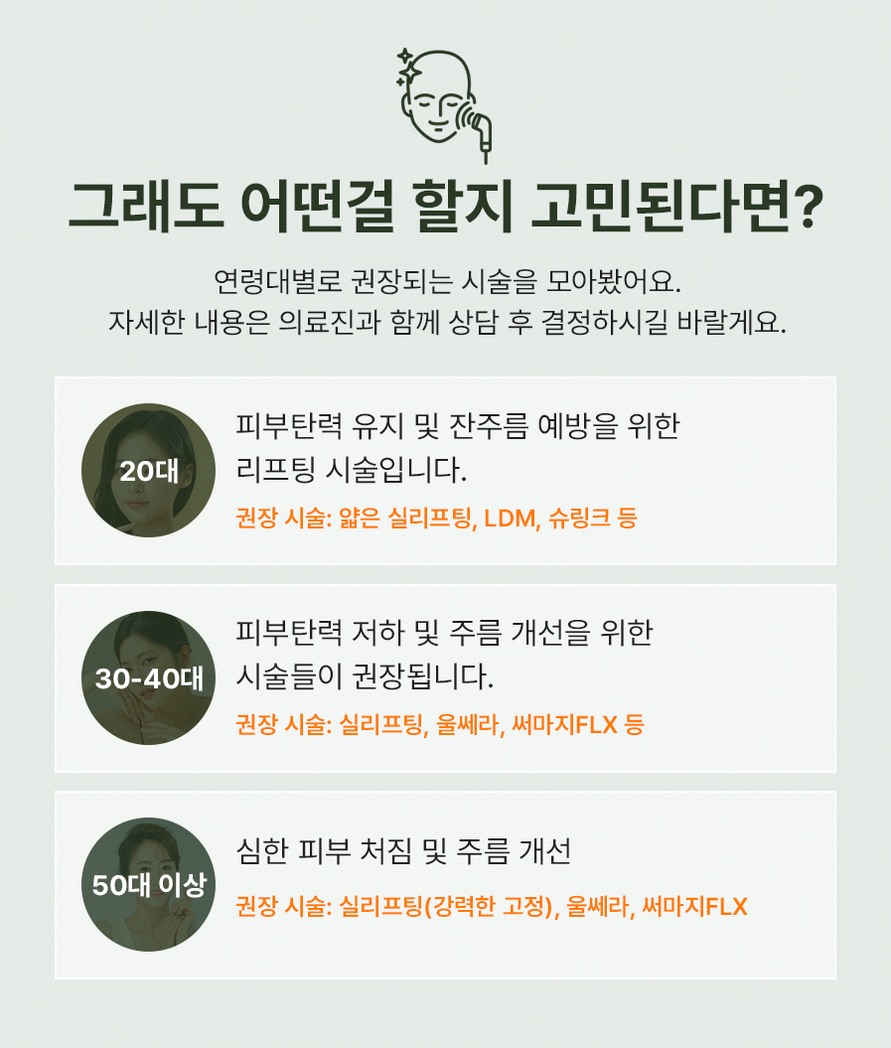
Age and skin laxity also influence the plan:
Late 20s to 30s: Focus on prevention and early tightening, often with milder devices like Shurink or SkinTyte, and conservative injectables.
40s to early 50s: Combination of deeper ultrasound or radiofrequency with targeted threads or volume restoration.
Mid 50s and above: More emphasis on realistic expectations, maintenance, and possibly staged treatments rather than one intensive session.
Preparing from overseas: online consultation
If you are planning to travel to Korea for lifting, early online consultation is very helpful. Many international patients start by sending clear photos and basic information.
Useful information to prepare includes:
Front and side photos of your face and neck in good lighting, without heavy makeup or filters.
Your main concerns: for example, “jawline and under-chin area” or “nasolabial folds and midface.”
Your age, general health status, and any chronic conditions.
History of previous treatments: lifting devices, threads, fillers, or surgery.
Travel schedule: expected arrival and departure dates, and whether you plan other treatments.
During online consultation, you can discuss:
Which devices or combinations might suit your skin.
How many sessions are likely within your travel period.
Expected downtime, such as swelling or tenderness after threads.
Follow-up options once you return home.
It can be helpful to prepare a checklist of questions, for example:
Which layers of the skin or tissue will this treatment target?
How many shots or lines are typically used for my concern area?
What kind of anesthesia or numbing will be used?
What short-term changes should I expect in the first week?
A clear discussion before you book flights can reduce stress and help you plan your itinerary realistically.
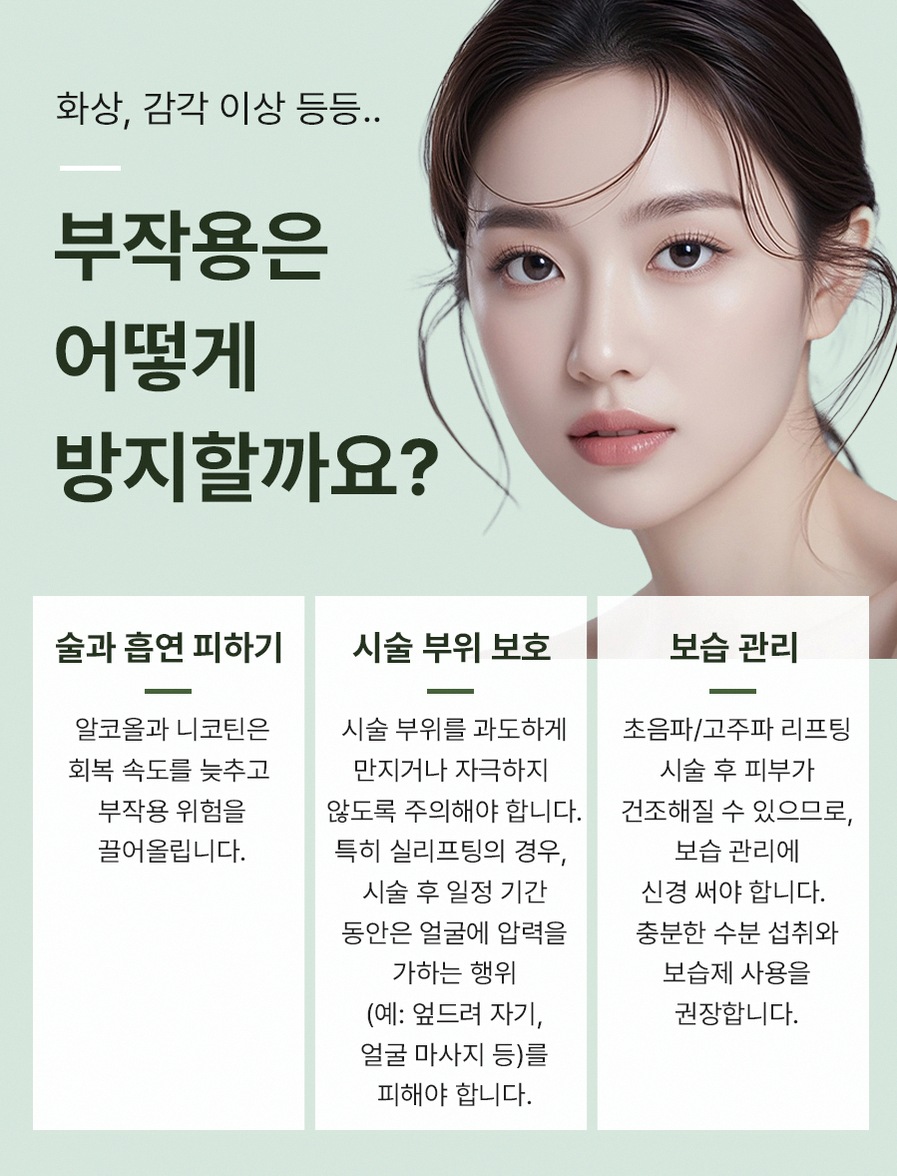
Expected visit timeline in Korea
Every clinic has its own process, but a typical visit for Dongtan lifting might look like this for an overseas patient.
Day 1: Consultation and planning
Check-in and registration.
Face-to-face consultation with the dermatologist, including skin assessment and review of your online information.
Discussion of final plan: which devices, whether threads or injectables are included, and the order of treatments.
If you agree with the plan, some device-based treatments may be done on the same day, depending on your schedule and the clinic’s policy.
Day 2–3: Main treatment session
If threads or a combination plan is chosen, the main session may be scheduled for the next day.
Preparation may include photo documentation, cleansing, and application of topical anesthetic cream or local injections.
Treatment time can range from 30 minutes to over an hour depending on the number of areas and methods.
After the procedure, you receive cooling, soothing care, and detailed aftercare instructions.
Day 3–5: Short follow-up
A brief follow-up visit may be recommended to check healing, especially after thread lifting or combined procedures.
The dermatologist can confirm there are no concerning reactions and may provide additional calming care if needed.
Total stay
Many international patients plan a stay of about three to five days for lifting-focused visits. If you are combining lifting with other skin treatments, you may need a slightly longer stay.
Aftercare and recovery
Non-surgical lifting usually has shorter downtime than surgery, but some temporary changes are normal.
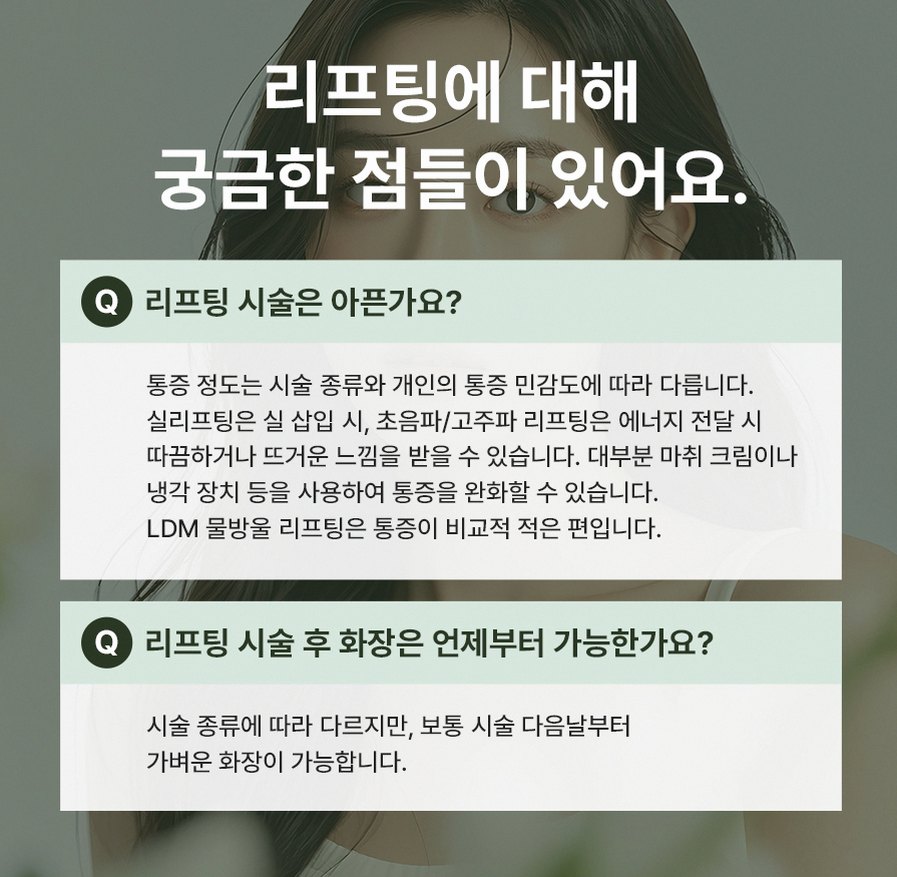
Common short-term effects:
Redness or mild swelling in treated areas
Tenderness or a sensation of tightness, especially after ultrasound or radiofrequency
Mild bruising or soreness along thread paths
Temporary numbness or sensitivity in certain areas
General aftercare tips often include:
Avoiding very hot saunas, intense exercise, or facial massages for a period recommended by the clinic.
Sleeping on your back with your head slightly elevated for a few days after threads.
Using gentle skincare and sun protection, avoiding harsh scrubs or active ingredients until cleared by the dermatologist.
Not pressing or pulling on the treated areas.
Most people can resume light daily activities soon after treatment, but visible bruising or swelling can last several days, especially with threads or injectables. This is important to consider when planning social events or work meetings after your return home.
Results and realistic expectations
Lifting treatments are designed to support and enhance your natural features rather than completely change them.
Typical result patterns:
Ultrasound and radiofrequency: Gradual tightening over weeks to months as collagen builds.
Thread lifting: Some immediate lifting effect, followed by gradual softening and collagen stimulation.
Injectables: Often visible quickly, with final settling over one to two weeks.
Factors that influence results include your age, skin quality, lifestyle, and how well you follow aftercare instructions. Clinics commonly recommend maintenance sessions at intervals that vary by treatment and patient.
It is important to discuss with your dermatologist what is realistically achievable for your face shape and skin, and to view lifting as part of a long-term skin health plan rather than a single event.

Questions to ask before you decide
When comparing lifting options in Dongtan, it can be helpful to look beyond price alone. Consider asking the clinic:
Which specific devices and thread types are used for my case, and why?
How many shots, lines, or treatment areas are included in the recommended plan?
What type of anesthesia is provided and how is pain managed?
What is the expected downtime and when can I safely fly back home?
What follow-up or online check-in is available once I return to my country?
Writing these questions down before your consultation helps you remember them, especially if you feel nervous or if English is not your first language.
Frequently asked questions about Dongtan lifting
Is one lifting session enough during a short trip to Korea?
For many international patients, a single well-planned session combining devices and, if appropriate, threads or injectables can provide noticeable improvement. However, collagen-building treatments work gradually, and some people benefit from follow-up or maintenance sessions over time. During consultation, the dermatologist can explain what is realistic within your travel dates and how to maintain results once you are back home.
How long before I see results from Ultherapy or Thermage FLX?
With Ultherapy and Thermage FLX, some people feel a mild tightening immediately due to tissue contraction, but the main changes appear gradually. Collagen remodeling typically becomes more visible after about two to three months and can continue to develop for several more months. Because of this, it is wise to schedule treatment well before any important event.
Will thread lifting look unnatural or too tight?
When planned carefully and performed conservatively, thread lifting aims to create a subtle, refreshed look rather than an over-pulled appearance. The dermatologist considers your natural facial movement, smile lines, and skin thickness when deciding how many threads to use and where to place them. Clear communication about your preferred level of change is important to achieve a natural-looking result.

Can I combine lifting with other skin treatments during the same trip?
In many cases, lifting can be combined with other skin treatments such as laser for pigmentation, pore care, or skin boosters, but the exact combination and timing should be decided by the dermatologist. Some procedures are best done on separate days to avoid excessive irritation or swelling. If you are interested in multiple treatments, mention this during your online consultation so your schedule can be planned efficiently.
Soft call to action
If you are considering Dongtan lifting and would like a customized, dermatologist-led plan using options such as Ultherapy, Thermage FLX, Shurink, SkinTyte, thread lifting, and injectables, you can start with an online consultation with Hus-hu Dermatology Clinic Dongtan. By sharing clear photos and your travel schedule in advance, you can receive a more precise treatment plan and prepare for a smooth, well-organized visit to Korea.
This article is for general information only and does not replace a personal consultation with a qualified medical professional. Individual conditions, risks, and expected outcomes should always be discussed directly with a dermatologist before deciding on any treatment.

- 공유 링크 만들기
- X
- 이메일
- 기타 앱


댓글
댓글 쓰기