Dongtan Rejuran Healer: timing for international patients
- 공유 링크 만들기
- X
- 이메일
- 기타 앱
Direct answer summary
Rejuran Healer is a polynucleotide (PN)-based skin booster commonly used in Korea to support skin quality and resilience rather than adding volume like a filler. For international patients visiting Korea, Rejuran treatments are typically performed over a series of sessions spaced a few weeks apart, with mild downtime and gradual, natural-looking changes.
Introduction: Rejuran in Dongtan for international patients
Many people in their late 20s to 50s travel to Korea for advanced anti-aging care, especially when they notice fine lines, dull or rough skin, enlarged pores, or early sagging. If you are searching specifically for Dongtan Rejuran, you are likely comparing different skin boosters and lifting options and want a medically grounded explanation, not just beauty marketing.
Rejuran Healer is a popular choice in Korea for patients who want to improve skin quality from the inside out. It is available in Dongtan, Hwaseong, Gyeonggi-do, and can be planned around a short or medium-length stay in Korea. This guide explains what Rejuran is, who may consider it, how a typical course is structured for overseas visitors, and what to prepare before you travel.
Treatment overview: what is Rejuran Healer?
Rejuran Healer is an injectable skin booster that contains polynucleotides (PN), which are fragments of DNA purified for medical use.
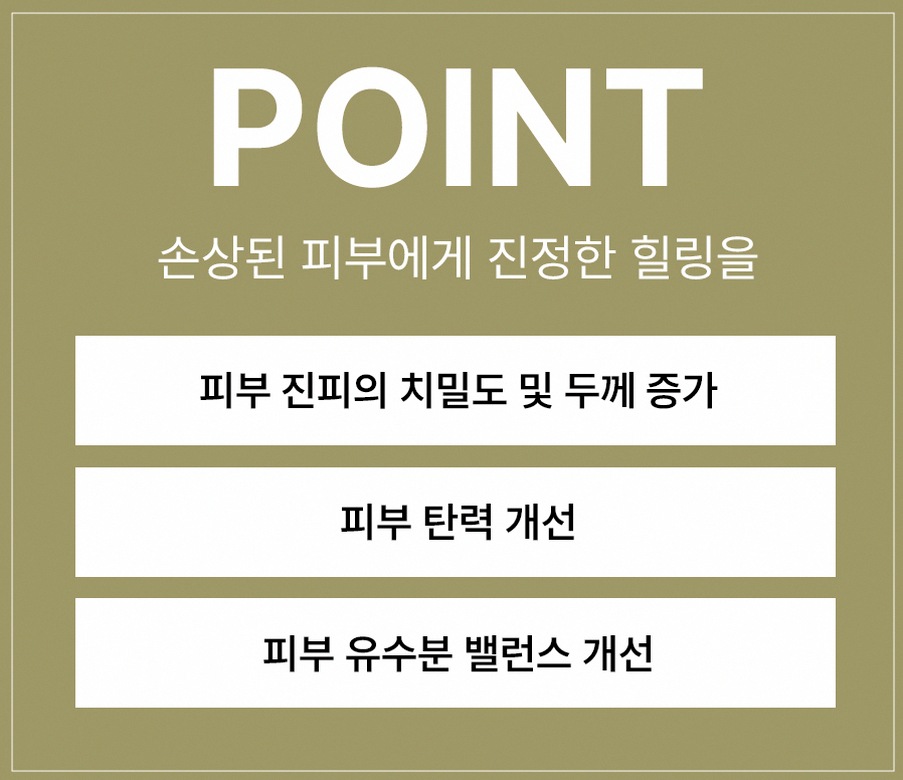
Unlike hyaluronic acid fillers, Rejuran is not designed to add volume or reshape facial contours. Instead, it focuses on skin regeneration and quality. The injections are placed in the superficial to mid-dermis in many small points across the treatment area.
Key expected effects include:
Improvement of fine lines and early wrinkles, especially on the cheeks and around the eyes.
Better elasticity and firmness, giving the skin a more supple feel.
Smoother texture and reduced roughness, with a more even surface.
Support for the skin barrier and hydration over time, which may help skin look less tired and less easily irritated.
Support for thin, fragile, or previously damaged skin, for example after repeated laser treatments or chronic irritation.
Because Rejuran works by supporting the skin’s own repair processes, changes tend to appear gradually over weeks and months, and are usually subtle and natural rather than dramatic.
Who may consider Rejuran in Dongtan
Rejuran can be considered by adults who want to improve skin quality rather than change facial shape. It is often chosen by:
People in their late 20s and above who are starting to see early signs of aging such as fine lines, slightly enlarged pores, or mild loss of elasticity.
Individuals with dull, rough, or tired-looking skin who want a more refined texture and healthier appearance.
Patients with fine lines around the eyes, cheeks, or mouth who prefer a regenerative approach instead of or in addition to fillers.
People who feel their skin has become thinner or more sensitive after repeated laser, peeling, or harsh skincare.
Those with enlarged pores and mild laxity on the cheeks who want better firmness and smoother surface.
Rejuran is also often selected in these situations:
After repeated laser or peeling sessions, to support recovery and barrier function.
Together with lifting devices such as Ultherapy, Thermage, or Shurink, where the device targets deeper tightening and Rejuran improves the more superficial skin layer.
By patients who prefer a natural, step-by-step improvement instead of a noticeable volume change.
However, Rejuran is not suitable for everyone. Final suitability should always be determined through an in-person consultation and skin assessment by a dermatologist, taking into account your medical history, current medications, and other ongoing treatments.
How Rejuran works: simple mechanism explanation
Polynucleotides (PNs) are short DNA fragments that are marketed to support dermal repair processes such as collagen production and extracellular matrix maintenance.
In simple terms, PN can:
Support skin cell activity and communication in the dermis.
Encourage collagen production and help maintain the extracellular matrix, which is the structural network that gives skin firmness and elasticity.
Support tissue repair and improve microcirculation, which can contribute to healthier-looking skin.
Timeline of expected changes is usually as follows (this can vary by person):
Short term (days): Right after treatment, small bumps and mild swelling appear where the injections were placed. These usually settle within one to two days. As the bumps flatten, some people notice a slight glow or smoother feel.
Mid term (weeks): Over several weeks, many patients report improved texture, better hydration, and softening of fine lines. Pores may appear less noticeable as the skin surface becomes more even.
Long term (after a series): After completing a series of sessions, skin often feels more elastic and resilient. Fine lines may be softened, and overall skin quality can appear healthier and more stable.
Results are cumulative and gradual. Rejuran does not give instant lifting or volumizing like some fillers. It is better understood as a medium- to long-term investment in skin quality.
Dermatologist-led treatment process
For international patients, a structured and medically supervised process is important. At a dermatologist-led clinic, a typical Rejuran session follows these steps:

Initial consultation and skin analysis
A board-certified dermatologist reviews your medical history, current skincare, medications, and previous procedures. Your main concerns are discussed in detail, such as wrinkles, pores, dullness, or sensitivity. The doctor examines your skin type, thickness, and degree of laxity, and may suggest additional or alternative treatments if needed.
Treatment planning
Based on your skin and travel schedule, the dermatologist recommends the number of Rejuran sessions, the interval between them, and whether to combine with other procedures such as laser toning, fractional lasers, Ultherapy, Thermage, Shurink, or acne scar treatments. For overseas visitors, the plan often needs to fit within a limited stay, so the schedule is adjusted accordingly.
Preparation on treatment day
Your face is cleansed to remove makeup and sunscreen. A topical anesthetic cream is applied to reduce discomfort during injections. This cream usually needs 20 to 40 minutes to take effect.
Injection phase
The doctor injects Rejuran using fine needles or a specialized injector device, placing many small micro-injections across the treatment area. The full face is commonly treated; in some cases, the neck or under-eye area may be included if appropriate and safe for your skin.
Soothing care
After injections, cooling packs or soothing products may be applied to calm the skin and reduce redness or swelling. The medical staff checks your condition before you leave the clinic.
Post-treatment instructions
You receive guidance on what to avoid (for example, heavy exercise, sauna, alcohol) for a short period, and how to care for your skin at home. The next appointment is scheduled if you are staying in Korea long enough for a series.
Typical course and frequency
For local patients, a common Rejuran course is:
Many clinics use multiple treatment sessions spaced several weeks apart; maintenance scheduling is individualized based on factors such as age, lifestyle, and skin condition.
For overseas patients, the plan may be adapted. For example:
Short stay (about one week): One session focused on gentle regeneration and barrier support, understanding that results will be modest.
Medium stay (three to five weeks): Two sessions spaced about two to three weeks apart, sometimes combined with other treatments.
Longer stay or repeated visits to Korea: A full course of three to four sessions can be planned over several months, possibly coordinated with business trips or family visits.
Pain, downtime, and daily life
Pain level
With topical anesthetic cream, most patients describe Rejuran injections as tolerable pricking or stinging. Some tightness or mild burning can be felt during and shortly after the procedure, especially in thinner skin areas.
Downtime
Small bumps at each injection point are a normal and expected part of Rejuran treatment. These usually flatten within 24 to 48 hours. Mild redness is common on the day of treatment and may persist slightly into the next day. Tiny bruises can occur in some spots, especially in people who bruise easily or take blood-thinning medications.
Many patients can apply light makeup after a certain period, according to the clinic’s instructions, often from the next day. For overseas visitors, this usually allows you to continue sightseeing or business activities with minimal interruption.
Daily life precautions
After Rejuran, you are generally advised to:
Avoid heavy exercise, sauna, hot baths, and alcohol for a short time, often 24 to 48 hours, to reduce swelling and bruising risk.
Avoid harsh scrubs, peels, or active skincare ingredients (such as strong acids or retinoids) on the treated area for several days.
Use gentle cleansers, soothing moisturizers, and broad-spectrum sunscreen.
Expected results and limitations
Benefits
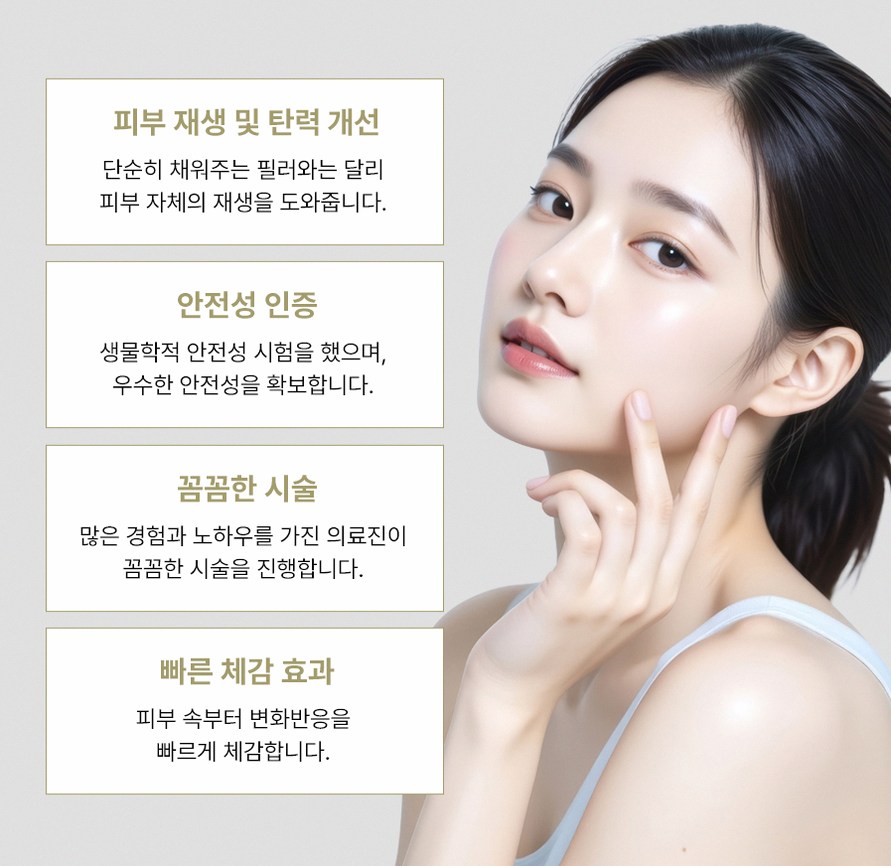
When Rejuran is done as a series and combined with appropriate home care, many patients experience:
More supple, elastic skin.
Softer fine lines, especially on the cheeks and around the eyes.
Smoother texture, with less visible roughness and sometimes less noticeable pores.
Healthier-looking, more resilient skin that tolerates environmental stress better.
Limitations
It is important to have realistic expectations:
Deep wrinkles and significant sagging usually cannot be corrected by Rejuran alone. In such cases, combination with lifting devices like Ultherapy, Thermage, or Shurink, or other procedures such as thread lifting or fillers, may be recommended.
One session typically gives only modest improvement. A series of sessions is usually needed for more visible changes.
Individual responses vary. Age, genetics, sun exposure, smoking, sleep, and overall health all influence the degree and duration of results.
Maintenance is usually required. Skin continues to age, so periodic follow-up treatments help sustain benefits.
Combining Rejuran with other treatments
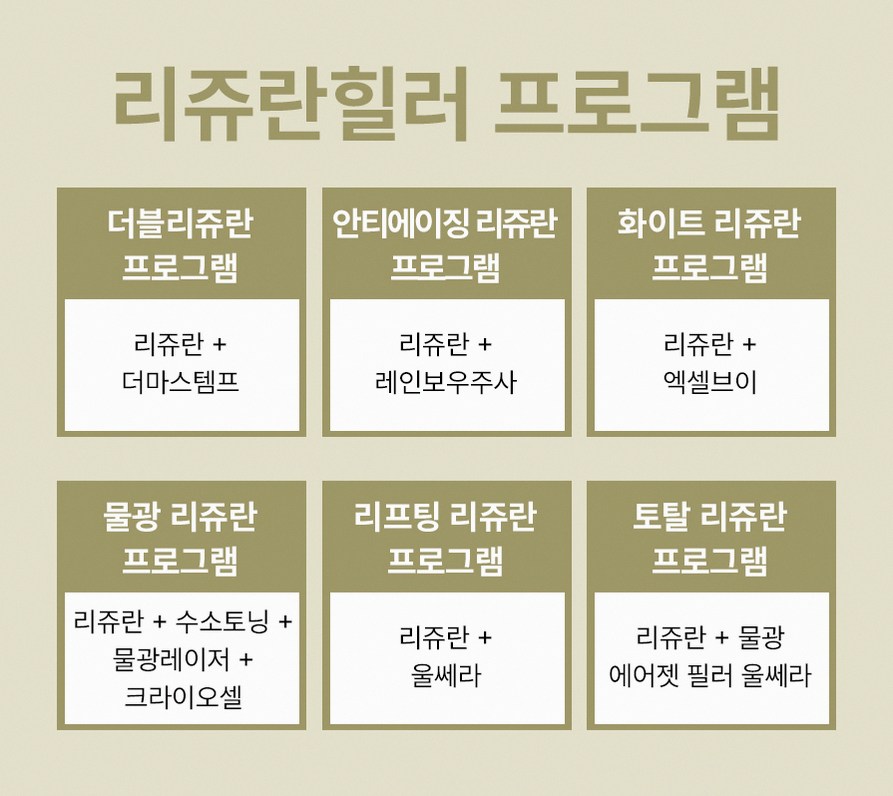
Because Rejuran targets skin quality rather than structure, it often works best when combined with other modalities available at a comprehensive dermatology clinic.
With lifting devices
Ultherapy, Thermage FLX, and Shurink focus on deeper tissues to stimulate tightening and lifting. Rejuran can be added to:
Improve fine lines and texture at the surface while the devices work on deeper support layers.
Enhance overall skin quality so that lifting results look more refined and natural.
With acne scar programs
For patients with acne scars, treatments such as fractional lasers or RF microneedling are often used to remodel collagen. Rejuran can be integrated to:
Support healing after energy-based procedures.
Help improve texture and skin quality between sessions.
With pigmentation or redness care
For pigmentation or redness, treatments like laser toning or vascular lasers may be used. Rejuran can:
Help strengthen the skin barrier.
Potentially reduce the risk of irritation in sensitive skin undergoing repeated laser sessions.
Any combination plan should be customized by a dermatologist based on your skin condition, priorities, and travel schedule. For overseas patients, it is especially important to plan timing so that more intense procedures are not scheduled right before your flight home.
Safety, side effects, and precautions
Common temporary reactions
After Rejuran, it is common to experience:
Redness at injection sites.
Small bumps or papules where the product was placed.
Mild swelling and tenderness.
Occasional pinpoint bruising.
These usually improve within a few days. Cooling and gentle skincare can help.
Less common issues
Less frequently, patients may experience:
Prolonged swelling or redness.
Visible small nodules that take longer to settle.
Infection at an injection site.
Allergic-like reactions or hypersensitivity.
If any unusual or persistent symptoms appear, you should contact the clinic promptly. For international patients, it is wise to ask during consultation how to reach the clinic after you return home if you have questions.
Who needs extra caution
Extra care or postponement may be needed for:
Pregnant or breastfeeding individuals.
People with active skin infections, open wounds, or severe inflammatory skin disease in the treatment area.
Patients taking anticoagulants or with bleeding disorders.
Those with a history of severe allergies or previous adverse reactions to injectables.
To support safety, it is essential to:
Provide a full medical history during consultation, including medications, supplements, and previous procedures.
Follow all pre- and post-treatment instructions.
Choose a medical setting where experienced dermatologists perform or closely supervise the procedure.
Why choose a dermatologist-led clinic in Dongtan
For a regenerative injectable like Rejuran, the experience and training of the doctor matter. In Dongtan New Town (Dongtan 2 New City), Hus-hu Dermatology Clinic Dongtan is run by two board-certified dermatologists who graduated from Kyung Hee University School of Medicine and serve as external faculty in dermatology at Kyung Hee University Medical Center.
One medical director has experience as a dermatology chief at the Presidential Medical Office in Seoul and achieved first place in the primary stage of the Korean dermatology board exam. The other medical director has training at the UCI Beckman Laser Institute and is an active member of multiple dermatology and laser societies.
The clinic offers a broad range of laser, lifting, acne, pigmentation, and body treatments. This allows Rejuran to be planned as part of an integrated program rather than a stand-alone injection. Non-reimbursed treatment fees are disclosed according to current regulations, and treatment decisions are guided by medical assessment rather than one device or product.
Online consultation and pre-visit preparation
Before you travel to Korea, it is helpful to arrange an online or remote consultation if possible. Many international patients share photos and medical information in advance so that the dermatologist can suggest a preliminary plan.
To prepare for an online consultation, you can:
Prepare clear photos of your face in good lighting from the front and both sides, without filters or heavy makeup.
List your main concerns in order of priority, such as fine lines, pores, dullness, or sensitivity.
Write down all current skincare products, including prescription creams, acids, retinoids, and any recent peels.
List previous procedures over the last one to two years, such as lasers, Ultherapy, Thermage, Shurink, fillers, or other injectables.
Note any allergies, chronic illnesses, and medications, including blood thinners and supplements.
Clarify your travel dates, how many days you can visit the clinic, and how much downtime you can accept.
During the consultation, you may want to ask:
How many Rejuran sessions are realistic within your stay.
Whether combination with other treatments is recommended or should be avoided.
What kind of short-term reactions you should expect and how they will look in photos or in meetings.
What to avoid before and after treatment.
Expected Korea visit timeline for Rejuran
Here is an example of how a Korea visit might look for Rejuran, depending on your stay length.
Short stay (5 to 7 days)
Day 1–2: In-person consultation and first Rejuran session. Mild bumps and redness are expected.
Day 2–3: Bumps flatten; redness improves. Light sightseeing or business meetings are usually possible.
Day 4–7: Skin continues to recover. You can fly home with minimal visible signs, though small bruises may still be present in some cases.
Medium stay (3 to 5 weeks)
Week 1: Consultation and first Rejuran session.
Week 3: Second Rejuran session. Some patients may combine this with gentle laser toning or other mild treatments.
End of stay: Return home with early improvements in texture and hydration starting to appear.
Longer stay or repeated visits
If you visit Korea frequently, your dermatologist can plan a full course of three to four sessions over several months, with maintenance once or twice a year.
Aftercare and long-term maintenance
After you return home, maintaining the benefits of Rejuran involves both clinic-based and home-based care.
Clinic-based maintenance
If you plan future trips to Korea, you can schedule maintenance Rejuran sessions or complementary treatments such as lifting devices or lasers. Your dermatologist can record your treatment history so that future visits build on previous results.
Home-based care
At home, you can support your skin by:
Using gentle cleansers and non-irritating moisturizers.
Applying broad-spectrum sunscreen daily.
Avoiding smoking and excessive sun exposure.
Being cautious with strong at-home peels or devices, especially if your skin is sensitive.
If you plan to receive other treatments in your home country, inform your local doctor about your Rejuran history so they can coordinate safely.
Frequently asked questions
How is Rejuran different from hyaluronic acid skin boosters?
Rejuran Healer uses polynucleotides to support skin regeneration, while many common skin boosters use hyaluronic acid to hydrate and add subtle volume. Hyaluronic acid mainly attracts water and can give a plumping effect relatively quickly. Rejuran focuses more on long-term improvement in elasticity, texture, and barrier function by influencing collagen and the skin’s repair environment. Some patients receive both at different times, depending on their skin needs and the doctor’s plan.
How many Rejuran sessions are usually needed, and how long do results last?
Many patients are advised to start with three to four sessions spaced about three to four weeks apart. After this initial series, maintenance sessions every six to twelve months are commonly recommended, depending on age, lifestyle, and skin condition. Improvements in texture and fine lines may gradually appear over weeks and can last several months, but the skin continues to age, so ongoing care is important.
Is Rejuran suitable for sensitive or thin skin?
Rejuran is often chosen for sensitive or thin skin because it aims to support the skin barrier and regeneration. However, injections themselves can temporarily irritate the skin, causing redness and bumps. Whether it is suitable for you depends on the cause of your sensitivity, any underlying skin diseases, and your medical history. A face-to-face evaluation by a dermatologist is necessary to decide safely.
Can Rejuran be done together with Ultherapy, Thermage, or Shurink on the same day?
In some cases, Rejuran can be combined with lifting devices on the same day or within a short period, but this depends on your skin condition, energy settings, and the areas treated. Some doctors prefer to perform the device treatment first, then schedule Rejuran later to support recovery and surface quality. For overseas patients with limited time, same-day combinations may be considered, but the final decision should be made by the treating dermatologist after examining your skin.
What should I avoid before and after a Rejuran session?
Before treatment, you may be asked to avoid blood-thinning supplements or medications if medically appropriate and only after discussing with your prescribing doctor. On the day of treatment, alcohol and intense exercise are usually discouraged. After treatment, you should avoid sauna, hot baths, heavy exercise, and alcohol for a short period, and avoid harsh skincare products on the treated area for several days. Your clinic will provide specific instructions tailored to your situation.
When is Rejuran not recommended?
Rejuran may not be recommended for people who are pregnant or breastfeeding, those with active infections or severe inflammation in the treatment area, or individuals with certain medical conditions or allergies. It may also be less suitable if your main concern is severe sagging or deep volume loss, where lifting devices or fillers may be more appropriate. A detailed medical consultation is essential to determine if Rejuran is right for you.
Soft call to action for online consultation
If you are considering Rejuran in Dongtan as part of your visit to Korea, arranging an online consultation before you travel can help you use your time efficiently and set realistic expectations. By sharing photos, your medical history, and your travel schedule in advance, the dermatologists can suggest a personalized plan and explain how Rejuran may fit with other treatments.
Hus-hu Dermatology Clinic Dongtan is located on the 3rd floor of Port Central City on Dongtan-daero Sibeom-gil in Dongtan New Town, Hwaseong, Gyeonggi-do, with weekday, extended Friday, and Saturday hours. You can contact the clinic directly to ask about available appointment times, possible online consultation options, and how to coordinate your Rejuran sessions with your stay in Korea.
This article is for general information only and does not replace a personal consultation, diagnosis, or treatment plan from a qualified medical professional. Individual suitability and results vary, and all medical decisions should be made after direct discussion with a licensed dermatologist.

- 공유 링크 만들기
- X
- 이메일
- 기타 앱


댓글
댓글 쓰기